
PV Market Alliance expects 120 GW of new solar capacity in 2019
The global market stagnated last year, with around 98 GW deployed. For 2019, the experts expect stronger solar growth, provided there are no setbacks in China.
“Germany’s new 4 GW solar tenders are a huge opportunity”
Germany’s new energy law includes tenders for large-scale PV that could bring around 4 GW of new capacity online. Carsten Körnig, MD of the German Solar Association, told pv magazine the tenders could generate turnover of up to €4.5 billion for EPC contractors.
‘No alternative to 100% renewables’
Transition to a world run entirely on clean energy – together with the implementation of natural climate solutions – is the only way to halt climate change and keep the global temperature rise below 1.5°C, according to another significant study.
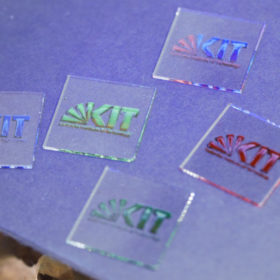
European researchers want to develop digitally printed, highly efficient and stable perovskite PV modules
German and Greek scientists are working with industrial partners on the technological feasibility of making solar modules based on perovskite absorbers. The prototypes should be freely configurable in size, shape and color.
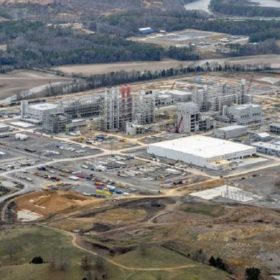
Wacker’s polysilicon business sees profit and turnover fall
The Munich-based chemical company posted an increase in sales but the fall in polysilicon prices last year and the temporary closure of US production after a hydrogen explosion had a significant impact on the results.
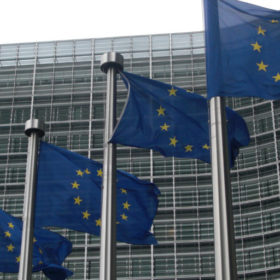
Sonnen receives €25 milllion financing from the European Investment Bank
The EIB said supporting the battery supplier will help Europe realize its clean energy targets. The funds are earmarked for the company’s European R&D, as well as stemming ‘operational burdens’ from its growth rate. Sonnen recently made headlines by opening a factory in Australia to supply its virtual power plant in Adelaide.
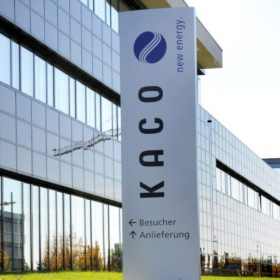
Kaco sells central inverter business to Korean developer OCI Power
German concern Kaco has sold its central inverter business. The German manufacturer hopes to focus on its string inverter and energy storage branches while the South Korean buyer hopes the newly acquired knowhow can improve the energy efficiency of its large-scale PV parks.
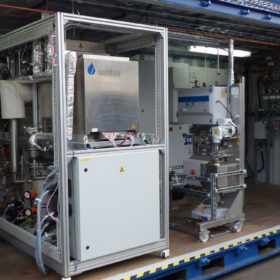
Power-to-X gains momentum on two fronts in Germany
Two power-to-gas projects promise to improve the technology. In Brandenburg, Edis and Gasag want to transform renewable power into hydrogen, driving sectoral coupling. And Sunfire has switched on its first co-electrolysis project.
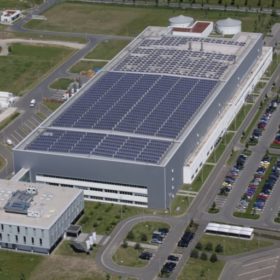
Astronergy will halt module production in Germany
The German subsidiary of the Chinese Chint Group will be restructured. The German site will in future focus on marketing and sales as well as areas such as customer care, logistics, customs clearance and other business-related services for European and global customers. More than 200 of the 230 employees will lose their jobs when production stops.
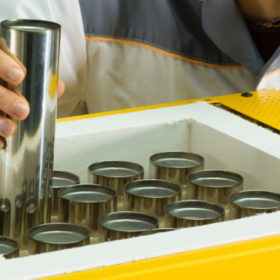
Fraunhofer IKTS unveils alternative for PV home storage based on sodium-nickel-chloride
At a storage fair in Dusseldorf, researchers will present a ceramic high-temperature battery. Storage costs using sodium-nickel-chloride battery cells are said to be 50% lower than those of lithium-ion.
