Solar-plus-storage will start to make big inroads in the year ahead
By this time next year we may be able to wave goodbye to that old chestnut about renewables endangering security of supply. Elsewhere, the price of lithium – and the products it goes into – could go either way after tanking this year.
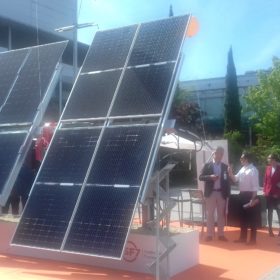
Europe on track for decade-topping 16.7 GW of new solar this year
Trade body SolarPower Europe’s preliminary statistics suggest this could be the continent’s best year for PV since 2010, with capacity additions set to soar 104% year on year. Spain is leading the way with an expected 4.7 GW of new solar, followed by Germany, with 4 GW.

Renesola exits Vietnam, India and Korea
The Shanghai-based project developer – which will soon relocate to the U.S. – says the profit margins are not high enough in those markets and has cancelled its project pipeline in the nations. The company has also changed its CEO after less than five months and is on a drive to reduce capital costs.

Hungary launches first renewables auction and tops 1.1 GW of solar
The EU member state added 418 MW of new solar in the first six months of the year and its energy regulator expects another 1.4 GW in the years ahead, as a result of the METAR incentives scheme introduced in 2017. The regulator has also announced a pilot renewables auction with the results expected early next year.
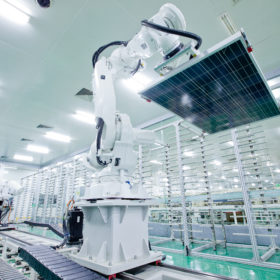
Jinko launches Tiger module Down Under
The Chinese manufacturer has officially unveiled its high-efficiency product in Melbourne after celebrating a 13.6 MW panel order from the nascent Hungarian PV market.

Greece and Hungary pledge to phase out coal
Athens-based policy group The Green Tank labelled Greece’s decision “historic” while Europe Beyond Coal, an alliance of civil society groups working to make Europe coal free by 2030 said Hungary should target a more ambitious 2025 phase-out.

Rooftop PV has reached grid parity in main EU markets
Researchers have developed a high-resolution geospatial method of assessing the solar potential of all buildings in the EU and concluded rooftop PV could provide a quarter of the bloc’s electricity needs. The scientists say grid parity for rooftop solar has been reached outside eastern member states with cheap fossil fuel electricity.

Japan’s Toray to manufacture battery components in Europe
Japanese materials company Toray has announced plans to open a facility for manufacturing battery separator films for use in lithium-ion batteries. The factory is expected to begin operations in July 2021 and will increase Toray’s production material for the component by around 20%.
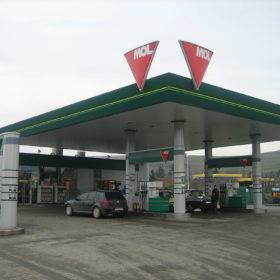
Hungarian oil and gas provider MOL enters the hydrogen business
The fossil fuel company will partner with Slovakia’s InoBat to develop hydrogen-related projects in central and eastern Europe. Sourcing and supply of hydrogen will be the main focus of the cooperation.

Hungary deployed more than 400 MW of solar in 2018
The nation had a record year for solar energy development. Most of last year’s new additions – 320 MW – came through a FIT scheme but a further 90 MW was represented by net metered installations. Hungary’s cumulative installed PV capacity reached around 700 MW in 2018.
