
Solar financing up but policy support is still crucial
Talk of ‘grid-parity’ and ‘subsidy-free’ solar has had industry figures cherishing the ideal of a sector that can operate free of the caprices of government but a peer behind the latest global PV funding figures demonstrates just how dependent on policy the solar industry remains.
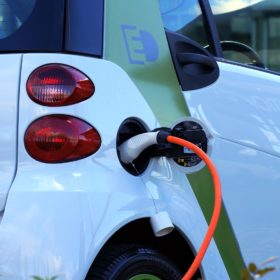
Indian ministry calls for EV manufacturing equivalent of Detroit
The nation’s annual Economic Survey placed EVs at the heart of India’s decarbonization and called for an industrial hub where electric vehicles and the batteries to run them could be manufactured.

‘Anti-dumping duty on coated steel will impede solar growth’, Indian ministry warned
Citing the risk to solar projects, lobby group the National Solar Energy Federation Of India has asked the Ministry of New and Renewable Energy to exclude flat steel products coated with alloy of aluminum and zinc from anti-dumping duty.

Second procurement announcement will make for 2.4 GW of new solar in India
Unlike the other, India-wide 1.2 GW tender rolled out simultaneously yesterday, the delivery point for a second wave of projects will be designated inter-state transmission system substations in the state of Madhya Pradesh.
Indian government tenders another 1.2 GW of solar
The Solar Energy Corporation of India has invited bids to set up 1.2 GW of grid-connected solar under the fifth phase of its national interstate transmission system program. The projects – to be established on a build, own, operate basis – will be awarded through e-bidding and a reverse auction with a tariff ceiling of Rs2.65/kWh. Bidding closes on July 31.

Study examines 7.8 TW solar potential of the Belt and Road route
China’s vast continent-spanning infrastructure project could fertilize solar growth along its perimeter at considerable scale as energy demand in the countries along the route is set to surge.
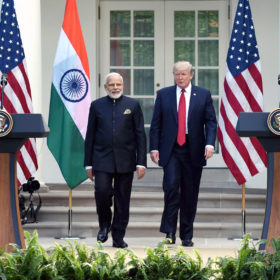
India wins WTO solar dispute against US
A World Trade Organization panel has found a U.S. move to incentivize the use of domestic solar products put imported goods from India and other countries at a disadvantage.

Researchers develop method to synthesize graphene from abundant eucalyptus bark
Australian and Indian scientists have developed a method of manufacturing soluble graphene in a cost-effective and eco-friendly way from one of Australia’s most common resources, gum trees.
India mulls ban on diesel and petrol driven vehicles
The new government’s chief policy thinktank has suggested banning sales of non-electric two and three wheelers in 2025 and cars, trucks and buses five years later as well as forcing public fleets and the cars used by ride hailing apps to be electric.
Solar, storage and wind can keep us on track as far as 2030
This year’s New Energy Outlook report by Bloomberg New Energy Finance predicts renewables can keep us on track for less than two degrees of global heating for the next decade. But after that, other technologies will have to do their bit.
