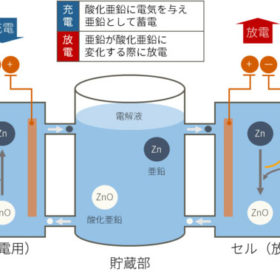
Sharp begins developing zinc-air flow batteries for renewables storage
Sharp is developing a zinc-air battery tech for renewables storage. The device will be reportedly safer than their lithium-ion counterparts, with high energy densities.
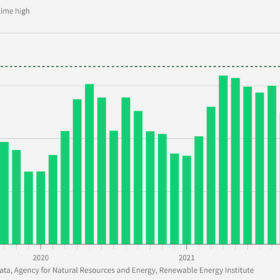
Japan and South Korea set solar records
The month of May saw Japan and South Korea set a new benchmark for solar electricity generation, according to a London-based think tank, but PV is still dwarfed by fossil fuel-powered electricity in the two countries.

Record solar investment keeping Chinese economy afloat
Investments in renewables are hitting new highs in China, as recurrent Covid-19 outbreaks and a crisis-stricken housing market threaten the world’s second-biggest economy, according to BloombergNEF.
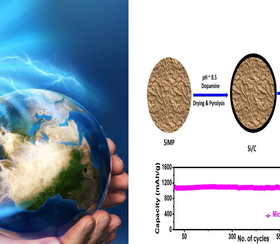
Resilient anode material for high-performance lithium-ion batteries
Scientists in Japan have developed black glasses grafted silicon microparticles as a negative electrode material to improve lithium-ion battery performance.
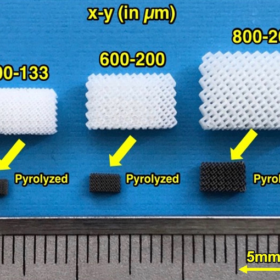
Micro-engineered, high-performing anode for sodium-ion batteries
Scientists in Japan have demonstrated sodium-ion batteries using hard carbon microlattices, produced with an inexpensive 3D printer. In addition to reducing the battery size and slashing manufacturing costs, the resulting anode allows fast transportation of energy-generating ions.

Magnesium superionic conductor for lithium-free solid-state batteries
Scientists in Japan have developed a novel metal-organic, framework-based magnesium ion conductor with superionic conductivity, even at room temperature.
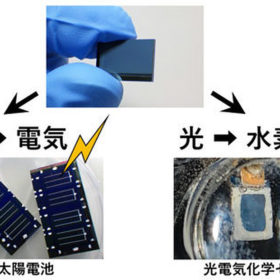
Chalcopyrite solar cell for tandem applications, photocatalytic water splitting
Japanese scientists have built a chalcopyrite PV device for tandem solar cells and water splitting for hydrogen generation. The device has a power conversion efficiency of 11.05%, an open-circuit voltage of 0.960 V, a short-circuit current density of 15.9 mA cm−2, and a fill factor of 72.4%.
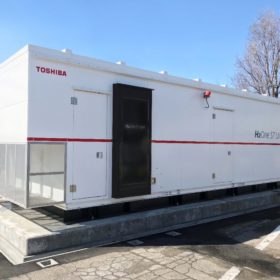
Toshiba energizes PV-powered hydrogen refueling station in Japan
The system is reportedly able to refill about eight hydrogen fuel cell vehicles, each in three minutes. It is also able to supply electric power by using hydrogen produced with renewable energy within the station.
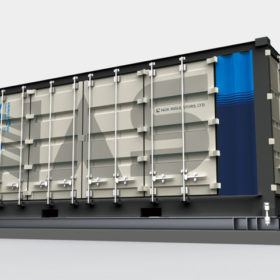
NGK Insulators links 200 kW/1,200 kWh NAS battery to 2.6 MW rooftop solar array at Japanese factory
Both the battery and the PV system are due to begin commercial operations in 2024.
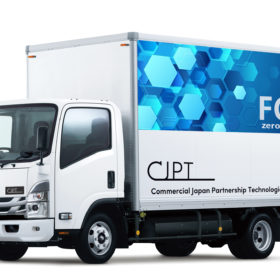
The Hydrogen Stream: Gas prices are higher than levelized cost of hydrogen for several technologies in Europe
In other news, Toyota unveiled plans to roll out light-duty hydrogen fuel-cell trucks for the Japanese market next year and the UK has launched a contract for difference scheme for large scale hydrogen projects. Furthermore, Japanese scientists have designed a ruthenium complex with a nitrogen-containing organic compound to improve high-temperature proton conduction in fuel cells.
