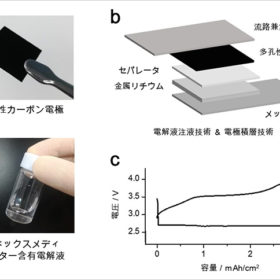
Japanese consortium builds lithium-air battery with energy density of 500 Wh/kg
A Japanese group has developed a storage system with potential applications in residential storage, electric vehicles, drones and Internet-of-Things devices.
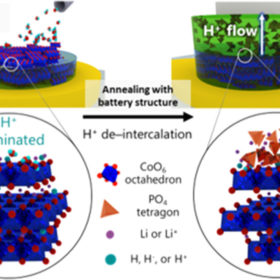
Reducing interface resistance in solid-state lithium batteries via annealing
Researchers from Tokyo Tech, AIST, and Yamagata University have demonstrated drastic reduction of resistance at the interface between the positive electrode and solid electrolyte of an all-solid-state lithium battery is achievable by annealing the entire battery cell.

The Hydrogen Stream: Australia approves $150 million hydrogen promotion program, Mitsubishi developing ammonia combustion burner in Japan
In other news, Oil India is setting up a 100 kW green hydrogen production facility in Assam, while the German government is providing €60 million for a project aimed at preparing electrolyzer technologies for industrial production at gigawatt scale.
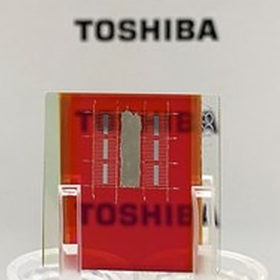
Toshiba claims 8.4% efficiency for transparent cuprous oxide solar cell
The record efficiency was achieved by engineering the cell with reduced copper(II) oxide (CuO) and copper (Cu) impurities in the thin-film deposition. It showed an open-circuit voltage of 1.13 V, a short-circuit current of 10.63 mA/cm2, and a fill factor of 0.696.
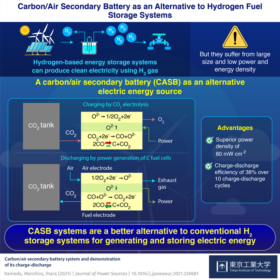
Carbon-air batteries vs hydrogen storage
Researchers from Tokyo Tech have developed an alternative to hydrogen energy storage which is smaller in size and more efficient. The system utilizes carbon as an energy source and demonstrates superior power density and charge-discharge efficiency of 38% over 10 cycles.
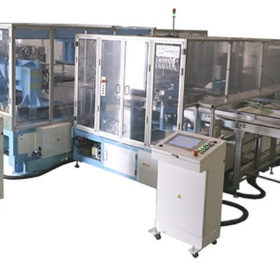
Solar module disassembly equipment from Japan
Developed by Japanese PV equipment provider NPC Incorporated, the solar module disassembly line is claimed to enable the reuse of frames, junction boxes, intact broken glass, solar cells and EVA sheets.
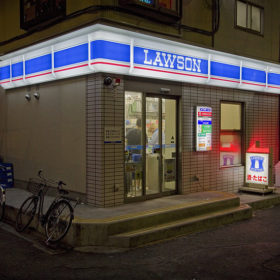
Mitsubishi commissions 45 MW of solar for convenience stores
Thousands of Lawson shops will be powered by solar farms developed by West Holdings Corp with Mitsubishi stating the clean power will start flowing in April.
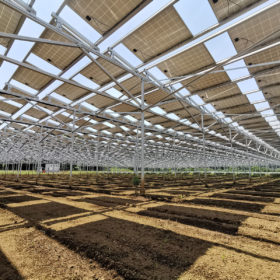
Japan releases new guidelines for agrivoltaics as installations hit 200 MW
The Japanese authorities have released new guidelines for the development of agrivoltaics projects and have excluded installations that do not host crops or livestock in the planning phase. Analyst Takeshi Magami says that agrivoltaics can be developed under the feed-in tariff scheme, in the free market via PPAs, or through a rebate scheme covering 50% of initial investments.

Record solar numbers expected this year but IEA highlights pricing concern
The Paris-based body expects the world will have installed almost 160 GW of solar this year, a record number, but still not enough to keep the prospect of a net zero global economy by mid century in sight.
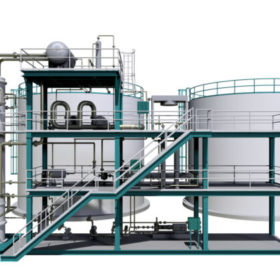
The Hydrogen Stream: New tech to store 5 tons of hydrogen per day
Proton Motor Fuel Cell and xelectrix Power have also developed a complete system that combines fuel cell and battery storage technologies and U.S.-based Plug Power is building a 100 MW electrolyzer in Egypt. Furthermore, Germany said it wants to deploy 10 GW of hydrogen capacity by 2030 and South Korea unveiled its hydrogen strategy.
