
Agricultural PV emerges as Japan’s next opportunity
Self-consumption, the ability to isolate from the grid and provide power in the event of outages, and agricultural solar are key components in the 2020 revisions to Japan’s feed-in tariff program, reports RTS Corp.’s Izumi Kaizuka.
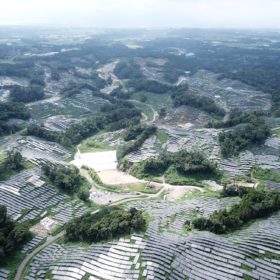
Japanese golf course becomes 100 MW solar park
A new 100 MWp solar power plant supplied with Kyocera solar modules has begun operation in Japan’s Kagoshima Prefecture. Operated by the Kyocera-backed Kanoya Osaki Solar Hills LLC joint venture, the plant is one of the largest PV facilities on the island of Kyushu. Venture partner Tokyo Century arranged financing for the project with 17 regional banks.
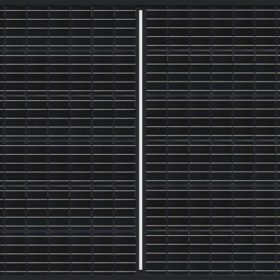
Sharp unveils black, half-cut-cell module
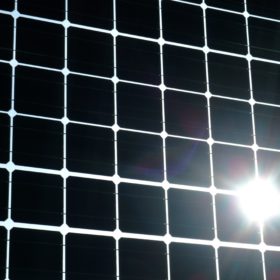
The solar panel will be part of the half-cut-cell series recently launched by the Japanese manufacturer and the company claims it is ideal for rooftop PV projects with aesthetic requirements. The 19.0%-efficient product has a power output of 320 W.
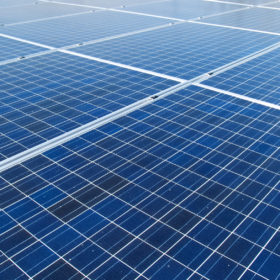
New method to measure cell voltages in operational PV modules
Scientists in Japan have proposed a new model to estimate cell voltages in solar modules by irradiating the cells with a weak modulated laser light. The method could be used to detect hot spots and other panel-degradation issues, such as potential induced degradation (PID) peeling, cracking, and poor contacts.

Covid-19 weekly round-up: US job losses raise concern but France and China continued to add new solar
Cell supply shortages could kick-start manufacturing activity in India, EV car sales are braced for a fall while still gaining market share and a new date has been set for the world’s biggest solar trade show.
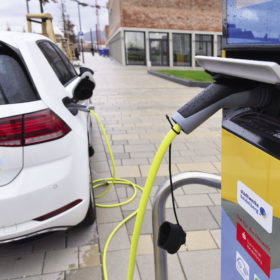
Electric vehicles show more resilience than conventional cars during Covid-19 shock
EV sales are set to be 1.7 million off because of the economic fallout of the Covid-19 crisis, however analyst BloombergNEF predicts that will be less of a hit than the anticipated fall in sales of conventional cars, increasing the penetration of electric models into the overall market.
A new concept for heat-recovery solar cells
Researchers in Japan have demonstrated a new concept for a ‘heat-recovery’ solar cell, which they claim has the potential to exceed the theoretical limit for cell efficiency. They say, however, that a suitable material for the energy filtering layers is yet to be identified. The cell is equipped with a 100-micron thick silicon absorber, two electrodes and carrier-energy filtering layers placed between the absorber and electrodes.

New PV system for facades, windows in Japan
Japan’s Kaneka and Taisei have designed their T-Green Multi Solar system to be integrated into walls and window surfaces. The system is available in two different versions – a solid type in which PV laminates are turned into vertical exterior panels or walls, and a variant that achieves transparency through striped solar cells that are integrated into window glass.
The week in perovskites
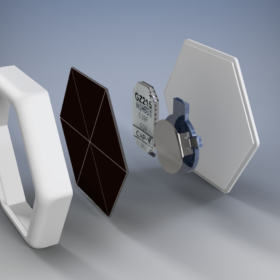
As a focus of research at leading institutes the world over, new developments in the perovskite field come thick and fast almost every week. From x-ray observations on a nanoscale to financing and plans for mass production, pv magazine is bringing together some of the most exciting developments of recent weeks.
Covid-19 pandemic puts 150 GW of PV, wind at risk in Asia
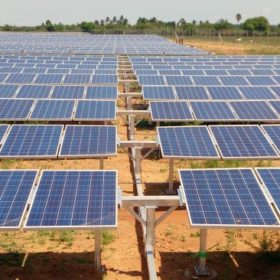
Up to 150 GW of PV and wind projects could be postponed or canceled throughout the Asia-Pacific region by 2024 if the coronavirus-triggered recession continues beyond the current year, according to new research by Wood Mackenzie.
