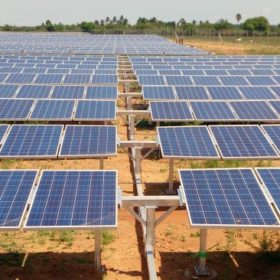
Covid-19 pandemic puts 150 GW of PV, wind at risk in Asia
Up to 150 GW of PV and wind projects could be postponed or canceled throughout the Asia-Pacific region by 2024 if the coronavirus-triggered recession continues beyond the current year, according to new research by Wood Mackenzie.

Covid-19 weekly briefing: A cold wind for APAC renewables, respite for Indian developers and another salary cut for SunPower execs
The coronavirus epidemic continues to batter the global economy, including the solar industry, but falling demand during lockdowns has brought negative energy prices as well as helping drive record solar generation, amid less-polluted skies.
New technique to determine best cooling technique for solar modules
A new paper published by researchers at Malaysia’s Multimedia University provides a new method to assess the effectiveness of different cooling systems for photovoltaic modules. The proposed technique relies on measuring the output of the module with added cooling and comparing this to its power rating under standard test conditions.

Adding solar at airports
An Indo-Malay research group has sought to define the best conditions for developing large scale solar projects at airports. The researchers provided insight on glare analysis as well as design and performance.

First Solar manufacturing unaffected by Covid-19 measures
The US solar company says its production lines in Ohio, Malaysia and Vietnam have thus far been able to carry on operations. The company says measures have been taken to protect its workers at all of its premises.
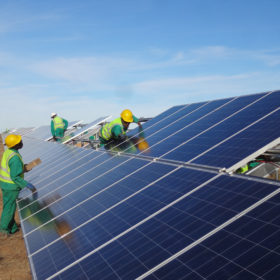
Scatec Solar reports limited Covid-19 impact thus far
While it has seen little fallout for its operating PV assets, the Norwegian solar developer says the coronavirus pandemic has started to affect construction, commissioning and testing of some of its new solar plants.
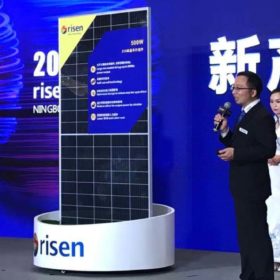
‘First shipment of 500 W modules’ announced
Chinese manufacturer Risen Energy will supply Malaysia’s Tokai Engineering with 20 MW of its new panels, unveiled in December. Risen claims its products can help reduce balance-of-system project costs by 9.6% and the levelized cost of energy by 6%.
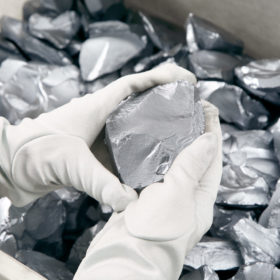
Is this the end for Korean polysilicon?
The nation’s only two poly manufacturers could both shutter factories in their homeland due to downward price pressure. OCI says it will maintain only 6,500 MT of its 52,000 MT annual production capacity in an operational state and Hanwha Chemical says it is ‘examining the situation’. Poly analyst Johannes Bernreuter has discussed the reasons for the crisis with pv magazine.
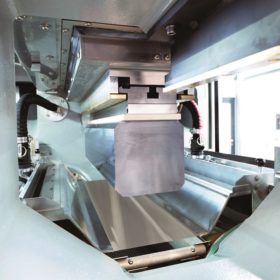
MIT researchers put slimmer silicon back on the table
With solar grade polysilicon prices having plummeted in recent years, cutting down on consumption of the material has not been a priority. But strategies exist and significant savings can be made through deploying thinner wafers that use less silicon, insists a new paper published by MIT and NREL. And as manufacturers are increasingly hitting dead ends on other routes to cost reduction, this option could be back on the table for many.

Five bidders set to secure 490 MW in Malaysia’s third solar auction
Four bids have been lodged for 100 MW projects and fifth for a 90 MW facility, all in peninsular Malaysia, to indicate the 500 MW tender will fall short of its intended capacity. The lowest solar power price lodged is for $0.042/kWh.
