TOPCon heads to the rooftop
This year has seen solar manufacturers begin what is shaping up to be a major shift toward n-type technologies, and investors are keen to see these technologies in action in ‘real world’ installations. In this pv magazine Webinar, we take a look at the latest in TOPCon technology from one of n-type’s earliest backers, and share case study details from one developer already installing these modules and monitoring their performance in the field.
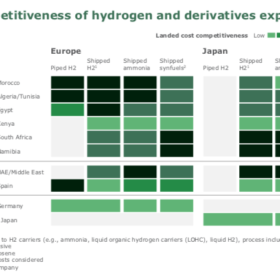
The Hydrogen Stream: Africa could become key green hydrogen market by 2050, says Masdar
Masdar says Africa’s annual hydrogen exports could hit 40 million tons by 2050, while Israeli researchers have published a new study on the discharge characteristics of oxidized intermediates formed under water photo-oxidation conditions.
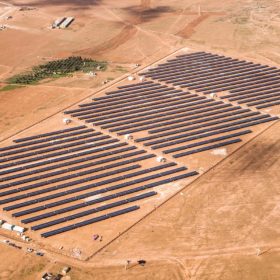
Solar in exchange for desalinated water
Israel and Jordan have agreed to pair 600 MW of solar with an undisclosed amount of storage. The deal, which was brokered by the United Arab Emirates at COP27, will see Jordan provide electricity to Israel in exchange for desalinated water.
Oman kicks off tender for 500 MW solar park
The Omani authorities aim to develop a 500 MW solar project in Ibri, in northwestern Oman, where other PV facilities are located. It will be commissioned by the fourth quarter of 2026.

The Hydrogen Stream: Researchers identify light-triggered coupled oxygen evolution mechanism
Researchers in Singapore have developed a new light-triggered coupled oxygen evolution mechanism that builds on past oxygen evolution research. Oman, meanwhile, has announced a new hydrogen strategy.

Uninterrupted PV generation without storage
An Israeli scientist has proposed a way to achieve uninterrupted PV power on the moon without using energy storage. The proposal involves the installation of PV panels around a 360-degree latitudinal ring close to one of the moon’s poles. There would be no inter-array shading, and static vertical PV arrays and arrays mounted on single-axis vertical trackers could be viable mounting structures.
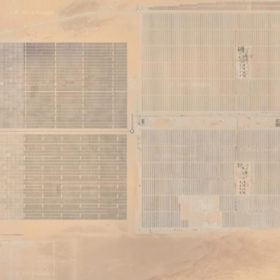
Dubai solar park hits 1.8 GW of generating capacity
The Dubai Electricity & Water Authority (DEWA) has installed 270 MW of PV panels at the massive Mohammed bin Rashid Al Maktoum project since August, bringing its operational capacity to 1.83 GW.

The Hydrogen Stream: Svevind to invest in 20 GW of electrolysis capacity in Kazakhstan
A unit of Svevind has signed an agreement to invest up to $50 billion in a project on the Caspian Sea that could produce up to 2 million tons of green hydrogen per year. Stellantis, meanwhile, has revealed plans to mass produce light commercial hydrogen vehicles.
Entering the Terawatt age: A 360° view on solar sustainability
Solar companies have an important role to play in embedding sustainability in their operations if lofty ambitions are to become a reality. On November 8, together with Trina Solar, we will examine the latest analysis of solar sustainability towards the terawatt age as well as providing insights into the report and the company’s ambitions for radically reducing emissions in its operations.
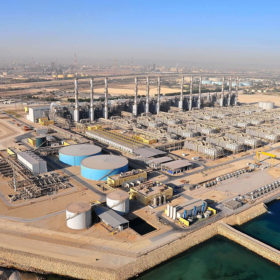
Alfanar to build 110 MW of solar for desalination plant in Saudi Arabia
Alfanar has revealed plans to set up a solar project including ground-mounted and floating PV to provide power to the Al Jubail 2 water desalination plant on the east coast of Saudi Arabia. It will require an investment of SAR 1.2 billion ($319 million).
