
The Hydrogen Stream: Svevind to invest in 20 GW of electrolysis capacity in Kazakhstan
A unit of Svevind has signed an agreement to invest up to $50 billion in a project on the Caspian Sea that could produce up to 2 million tons of green hydrogen per year. Stellantis, meanwhile, has revealed plans to mass produce light commercial hydrogen vehicles.
Entering the Terawatt age: A 360° view on solar sustainability
Solar companies have an important role to play in embedding sustainability in their operations if lofty ambitions are to become a reality. On November 8, together with Trina Solar, we will examine the latest analysis of solar sustainability towards the terawatt age as well as providing insights into the report and the company’s ambitions for radically reducing emissions in its operations.
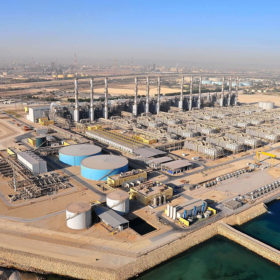
Alfanar to build 110 MW of solar for desalination plant in Saudi Arabia
Alfanar has revealed plans to set up a solar project including ground-mounted and floating PV to provide power to the Al Jubail 2 water desalination plant on the east coast of Saudi Arabia. It will require an investment of SAR 1.2 billion ($319 million).
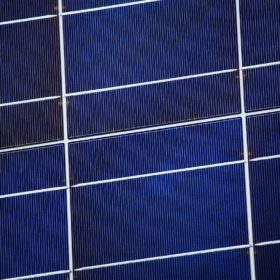
Turkey provides $410 million for 2 GW solar module factory
Smart Solar Technology has secured Turkish government support to build a vertically integrated solar module factory in Izmir, Turkey.
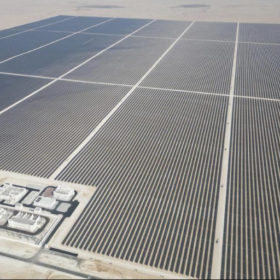
TotalEnergies, Marubeni switch on 800 MW of solar in Qatar
TotalEnergies, QatarEnergy, and Marubeni have switched on Qatar’s first large-scale solar plant in Al Kharsaah, west of Doha. The Siraj-1 plant features 2 million Longi Hi-MO 4 bifacial modules mounted on single-axis trackers.
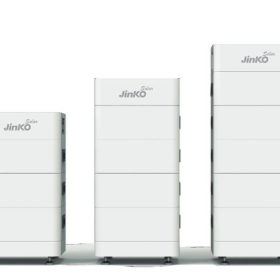
Storage could reshape solar market in MENA
Waleed AlHallaj, the head of business development for the Middle East and North Africa (MENA) at JinkoSolar, recently spoke to pv magazine about the prospects for the regional energy storage market. He said that storage systems have already penetrated markets with weak grids, such as Yemen and Lebanon.
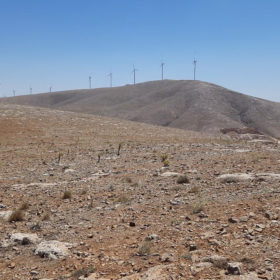
Utility-scale hybrid wind, solar in Turkey
Asunim is set to build 42 MW of solar at two sites, paired with existing wind farms in Turkey. The Turkish developer claims that the two projects will achieve a significantly lower levelized cost of energy.
Tailoring mounting systems for the Asia-Pacific
In this pv magazine Webinar, we will discuss a suite of innovative tracker solutions, introduced by our partner Trina Solar, which answer the need to make utility solar projects more adaptable, quicker to install, and ultimately more profitable.
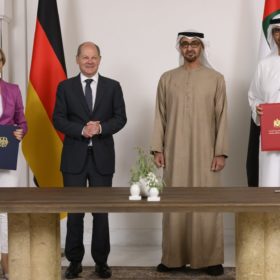
The Hydrogen Stream: GHD Group, Fraunhofer-Gesellschaft win contract for UAE national hydrogen strategy
Germany made efforts this week to expand hydrogen ties with the Gulf states, and Japan announced plans to team up with several nations to ramp up hydrogen production. ICIS, meanwhile, has started offering Europe’s first market-linked renewable hydrogen assessments.
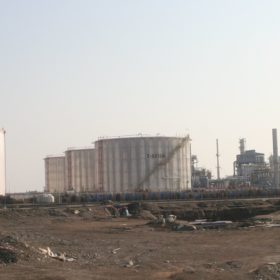
OQ to build 100 MW solar park at oil and gas site in Oman
OQ says it will set up a new 100 MW solar park at the Block 60 concession area, which is owned by Oman Oil Corporation Exploration & Production.
