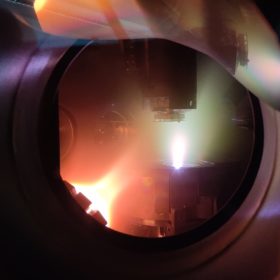
The Hydrogen Stream: New tech for solar water splitting
Helmholtz-Zentrum Berlin has unveiled new technology to improve thin metal oxide films for solar water splitting, and the European Energy Exchange has announced plans for a new hydrogen index. Indian Oil, Larsen & Toubro, and ReNew have agreed to set up a joint venture to develop India’s green hydrogen sector. And Iberdrola has revealed a plan to produce industrial green hydrogen, in cooperation with the European Investment Bank.
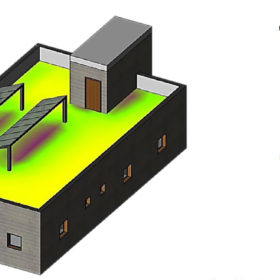
Rooftop PV to reduce cooling demand of uninsulated buildings
The shading effect of rooftop PV systems may help reduce cooling demand in uninsulated buildings by over 10% in the summer, according to new research from Jordan. The scientists also found that a rooftop array may increase a building’s heating load in the winter by 3.8%.
Rooftop & TOPCon: Appraising the benefits of TOPCon PV modules on LCOE for distributed generation project
In this pv magazine Webinar, we will learn about the premium technical features of TOPCon technology highlighting the impact on the LCOE of distributed generation (DG) projects, including calculation of the yield benefit for different environmental conditions and installation types to support project developers, EPC contractors, stakeholders for practical component selection decisions. Different business cases will be introduced and discussed to ascertain how TOPCon technologies may also be considered for improving a DG project’s quality and viability.
Automating the analysis and optimization of PV assets with emerging technologies from digitalization
Join this upcoming pv magazine Webinar to hear from asset managers and technology providers, to develop an understanding for the latest digital tools available to the solar sector, and how best to use them.

The Hydrogen Stream: New fuel cell electric vehicle from Canada
Elsewhere, the Fraunhofer ISE research institute has unveiled a new tool for high-resolution power-to-X kinetic analysis, and German entities have signed partnership agreements with the Abu Dhabi National Oil Company.
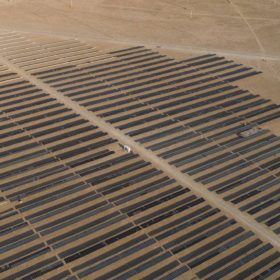
Masdar wants 200GW of renewables capacity
The state-owned UAE clean power developer appears to have quadrupled its previously announced ambition today as it announced its $20 billion renewables portfolio rose from 10.7GW to more than 15GW last year.
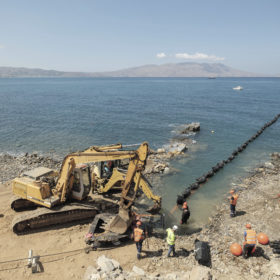
The weekend read: Super-grid forming in the Mediterranean
Electricity generation in the Middle East and Africa could soon support the development of an interconnection between Greece, Cyprus, Israel and Egypt. Ilias Tsagas examines the landscape for this infrastructure mega-project, and the possible benefits for solar.
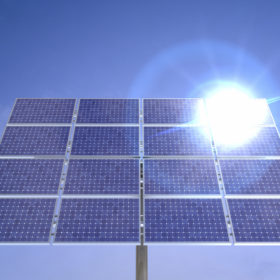
Temperature-dependent model to calculate solar LCOE
Developed by researchers in Saudi Arabia, the novel approach considers both the temperature-dependent power yield and the solar module time to failure (TTF), among other factors. According to its creators, the model can be applied to all kinds of module and cell technologies.
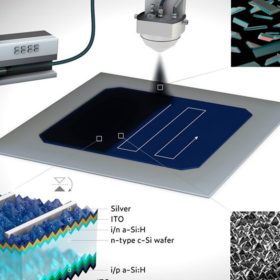
KAUST researchers achieve 20.1% efficiency in heterojunction solar cell based on 2D MXenes electrodes
The solar cell is based on the titanium carbide MXene and is claimed to have retained around 99% of its initial efficiency for more than 600 days of ambient air storage. The device was built using spray coating to directly deposit the titanium carbide flakes on the cell’s rear side.

The Hydrogen Stream: Metal foam for low-cost green hydrogen generation
Researchers from Saudi Arabia’s King Abdullah University of Science and Technology have presented the results of a low-cost method of generating carbon-free hydrogen. In other news, Norwegian fuel cell producer Nel ASA said it was ready to increase its electrolyzer production capacity to meet the European Union’s raised ambitions for renewable hydrogen, while oil giant Petronas Eneos announced plans to set up a hydrogen production plant in Indonesia.
