Solar and wind integration crucial as Southeast Asia electricity demand grows
The International Energy Agency’s latest report says solar and wind energy are well placed to meet Southeast Asia’s growing electricity demand. It adds that while additional deployment will create flexibility challenges, most countries in the region can integrate more solar and wind energy without requiring major system changes.
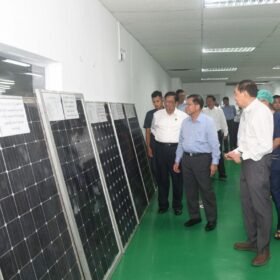
Myanmar’s Prime Minister calls for increased local solar panel production
Myanmar Prime Minister Min Aung Hlaing called for greater domestic production of solar panels and raw materials during a recent visit to a factory in central Myanmar, citing the need to strengthen local supply chains for renewable energy.
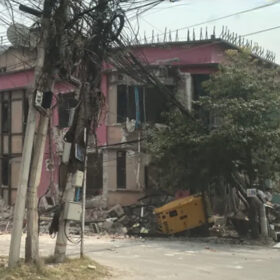
Myanmar earthquake disrupts solar wafer production, global supply chain
The recent 7.7-magnitude earthquake in Myanmar has disrupted solar wafer production in western China, where about 50% of the country’s wafer capacity is concentrated. Major manufacturers have suspended operations due to equipment failures, raising concerns over supply shortages and higher global solar prices.
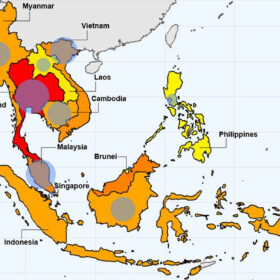
Southeast Asia has technical potential to deploy over 1 TW of floating PV
A group of researchers from the US National Renewable Energy Laboratory assessed the potential for floating PV (FPV) plants at reservoirs and natural waterbodies in 10 Southeast Asian countries. It found that the overall FPV technical potential for the region ranges from 477 GW to 1,046 GW.
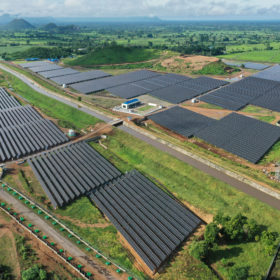
Myanmar switches on 20 MW of solar
Green Power Energy has successfully commissioned the Taung Daw Gwin solar project in Myit Thar, Myanmar. Its Gold Energy subsidiary won a bid to develop the 20 MW array in a utility-scale PV tender.

Off-grid solar for Himalayan food chains
Decentralized solar devices such as PV-powered portable irrigation pumps are technically viable solutions to meet the energy needs of food value chains across the high-altitude Hindu Kush Himalaya region, according to a new report by the International Renewable Energy Agency (IRENA).
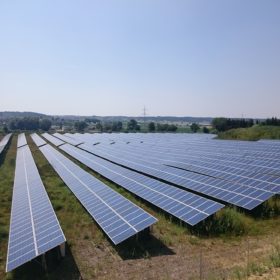
In Asean nations it’s all about the solar
Indonesia will have to get to work installing more than 24 GW of solar this year – and every year – if the region is to achieve the 2.1 TW to 2.4 TW of photovoltaics Irena has estimated it will require to achieve a net zero carbon energy system by 2050.
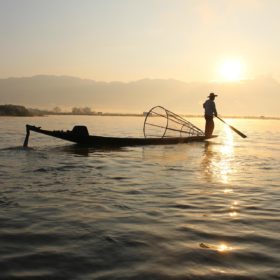
Myanmar’s steeplechase towards renewable energy
Myanmar’s government has announced a plan to increase conventional and renewable energy generation to address electricity shortages. Reports from Burmese exiles, however, detail increasing issues for the construction of large scale solar projects tendered prior to the military coup in February 2021 and Chinese inverter manufacturer Sungrow said the project it secured in the country’s first tender has been canceled.
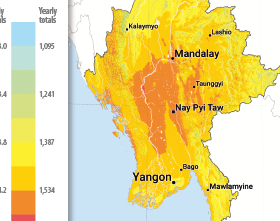
Myanmar extends deadline for 1 GW PV tender
Through the procurement exercise, the government wants to build ground-mounted solar power projects on an independent power producer (IPP), and build-own-operate (BOO) basis.
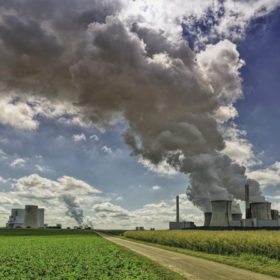
China holds the key to cancelling half the world’s new coal project plans
With pressure mounting on the world’s governments to turn their back on the fossil fuel, China and peers in South East Asia, Europe and South Asia could help deliver a coal-free future at the COP26 climate summit planned in Glasgow in November.
