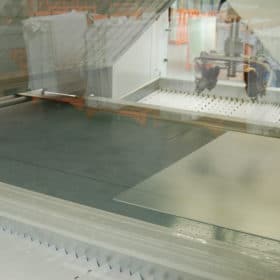
Anti-soiling nanocoating for large-scale PV
Dutch company Rads Global Business has developed an anti-soiling coating for solar PV modules that is claimed to reduce cleaning cost by around 60%. The anti-reflective and anti-corrosive coating is also said to mitigate potential-induced degradation (PID).
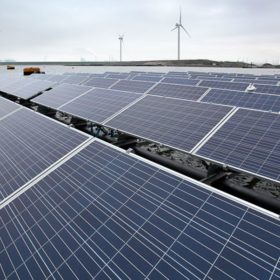
System design key to enhancing cooling effect of water in floating PV
Researchers in the Netherlands and Singapore have measured irradiance-weighted average temperatures of floating PV systems in both countries and have compared the results with reference rooftop and ground-mounted PV systems. They have discovered that floating PV systems with open structures, which allow wind to pass beneath the modules, can provide a higher heat loss coefficient.

Dutch business regulation agency rules network operators lacking capacity are allowed to deny grid-connection
The Netherlands Authority for Consumers & Markets has established that the first-come, first-served principle applied by grid operators is the correct approach to manage current grid congestion. The decision was taken to resolve a legal dispute between Liander and an agricultural entrepreneur that was denied grid access for a PV project.

Solar noise barriers require high self-consumption rates
Dutch contractor Heijmans has deployed a solar noise barrier to test three different PV module technologies, including cadmium telluride, CIGS, and crystalline products. Initial analysis has shown unexpectedly low returns, due to the rates at which the installation is selling power to the grid. But high levels of self-consumption could make such designs competitive with conventional noise barriers.
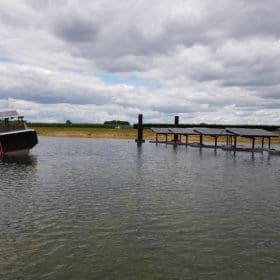
New study debunks several myths about floating PV
Dutch researchers have shown that bifacial floating PV arrays do not benefit significantly from sunlight reflected from the water, and claim that the water only reduces panel temperatures by a small amount. Bird droppings may also affect system performance, but floating PV could achieve a lower LCoE than ground-mounted arrays if such issues are addressed, they say.

Bulgaria and Romania set to be EU solar hotspots
Each of the nations, like Greece, will have gigawatt-plus solar additions in 2024, according to Solarpower Europe, enough to carve out a 3% slice of an anticipated 35 GW regional market.
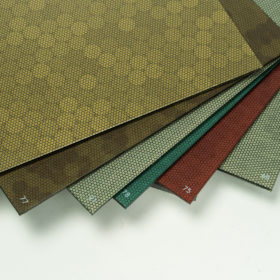
Colored facade solar panels with 13.8% efficiency
Dutch startup Solarix has developed a new line of facade solar panels featuring 13.8% efficiency and output ranging from 110 to 180 W, depending on the module size and color. The panels can be bolted or glued onto aluminum mounting systems applied to facades.
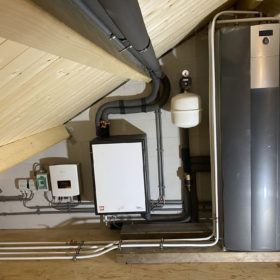
Photovoltaic-thermal district heating networks are feasible
A group of scientists and companies in the Netherlands has tested a PVT heating concept in a green district and has found that the proposed design, which is also based on underground storage and the use of heat pumps, is technically and economically feasible.
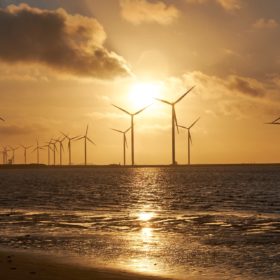
Offshore floating PV may reach maturity in 2030
According to a report from DNV GL, the North Sea may host around 100 MW of floating solar capacity by 2030, and 500 MW by 2035. The LCOE of offshore PV systems is currently estimated at around €354/MWh but in the future it should be close to that of ground-mounted solar parks.
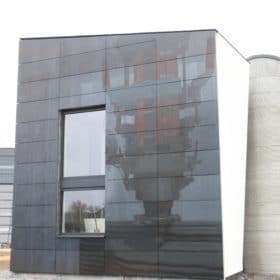
Solar facade for 3D-printed concrete house
Taiwan-based Heliartec has deployed a solar facade on a 3D-printed concrete house in Belgium. It said it installed the solar facade with the “circular construction” philosophy in mind.
