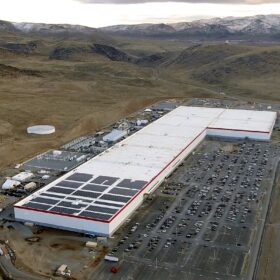
Tesla advances plan to build 100 GW of U.S. PV manufacturing capacity by 2028
Job advertisements on Tesla’s website outline the 100 GW ambition and follow reports the company is in talks with Chinese firms for the purchase of $2.9 billion worth of equipment for solar manufacturing.

Solar cyber threats expand, but inverters still stay in the crosshairs
In an interview with pv magazine, Jay Johnson, the CTO of US-based cybersecurity firm DERSec, explains that PV systems face cybersecurity risks that extend far beyond inverters, as demonstrated by a December attack on Polish solar plants where wiper malware targeted substation equipment rather than the inverters themselves. Vulnerabilities often lie in backhaul communication channels like APIs and mobile apps, making layered defenses, network segmentation, and vigilant monitoring essential to safeguard distributed energy resources.
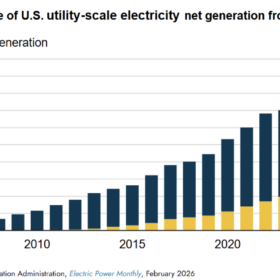
Solar and wind reach record 17% of US power generation
Combined generation from wind and utility-scale solar reached a record 17% of the US electricity mix in 2025, producing 760,000 GWh, up 88,000 GWh from 2024, according to the US Energy Information Administration (EIA).
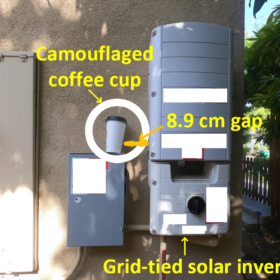
When tiny magnets attack PV systems
In an interview with pv magazine, cybersecurity expert Mohammad Al Faruque explains how seemingly simple sensors in PV systems and other energy systems are surprisingly vulnerable to magnetic, electrical, and acoustic perturbations, which can remotely influence control systems without physical access. Protecting these sensors requires both strict physical security and the development of hardened, interference-resistant technology to safeguard critical infrastructure.
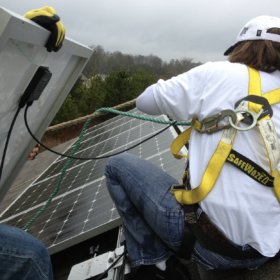
SiteCapture launches AI tool to automate solar field documentation
California-based software provider SiteCapture has launched an AI platform for the US solar market that automates job-site documentation, quality control, and reporting workflows for installers.
Canadian startup unveils AI tool for solar panel cleaning optimization
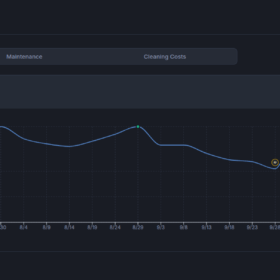
Swish Solar has an AI-driven tool that optimizes solar panel cleaning schedules to reduce soiling losses and operating costs. The platform uses data analytics and forecasting models to help operators time cleaning based on financial impact.

Sandia Labs benchmarks PV software providers in first ever blind comparison analysis
Sandia National Laboratories conducted the first-ever blind comparison of seven commercial PV modeling software, revealing that differences in weather handling, system modeling, derates, and assumptions grow as system complexity increases. The study emphasizes that software choice should consider project complexity, workflow, and modeling features rather than relying on rankings alone.
Low new module prices stall growth in secondary solar market
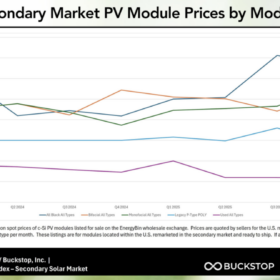
Data from EnergyBin and Buckstop shows used solar modules made up just 1% of resale listings in 2025, as falling prices for new panels weaken reuse economics.

US wafer origin rules put solar domestic content bonus at risk
A legal alert from Wiley says US Department of the Treasury and Internal Revenue Service (IRS) guidance could disqualify solar cells using imported silicon wafers from the 10% domestic content bonus under the Inflation Reduction Act.

US residential solar set for 33% decline in 2026, says Roth Capital Partners
Roth Capital Partners says it expects a sharp drop in US residential solar installations as tax credit changes and Foreign Entity of Concern (FEOC) rules constrain financing.
