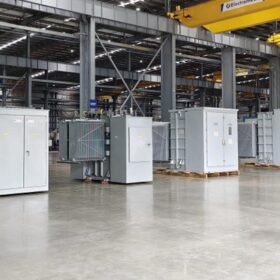
Developers secure US solar tax credit by ordering transformers
Solar developers in the United States are turning to custom-built transformers to meet new US Department of the Treasury rules for “physical work” and secure the 30% Investment Tax Credit amid tightening start-of-construction requirements.
Slash Opex with smart monitoring systems
Reliable monitoring and smart connectivity are key to maximizing energy yields and minimizing downtime at utility scale PV plants. In this pv magazine Webinar we will explore how DC combiner boxes and integrated monitoring solutions can help detect faults at PV plants early, reducing Opex and ensuring long-term performance.
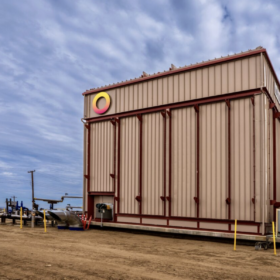
Rondo Energy’s 100 MWh heat battery powered by 20 MW of onsite solar
Rondo Energy’s 100 MWh heat battery, powered by 20 MW of onsite solar, could store industrial heat by using low-cost grid electricity generated during sunny and windy hours, the company said.
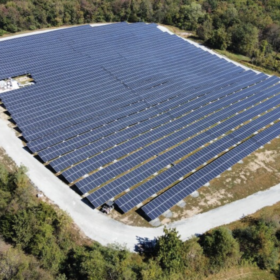
TotalEnergies turns closed US landfill into 7 MW solar plant
TotalEnergies has completed a 7 MW solar project on a closed landfill in Baltimore, Maryland, using specialized ballasted racking to install more than 15,000 panels expected to meet 11% of the local government’s electricity use.

Energy storage reshapes data center siting amid US regulatory pressure
Power cut regulations and slow permitting are driving US data centers toward storage-backed, grid-independent designs.
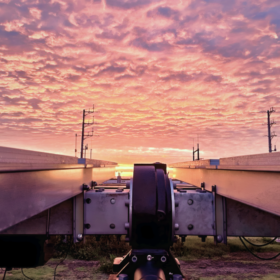
Solar tracker repowering emerges as key to sustaining older arrays
Aging utility-scale solar projects are driving interest in tracker repowering, while asset owners weigh costs against gains in performance and longevity.

Pollinator-friendly solar gains ground in renewable credit markets
As biodiversity metrics enter renewable energy credit schemes, developers and corporate buyers are turning to certified pollinator-friendly solar sites to enhance project value and meet environmental, social and governance (ESG) goals.
Ten reasons why behind-the-meter solar is a benefit
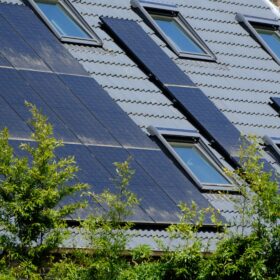
Behind-the-meter solar for homes, businesses, and communities comes with numerous benefits, said a paper from Stanford engineering professor Mark Jacobson.
Improving solar inverter design with silicones
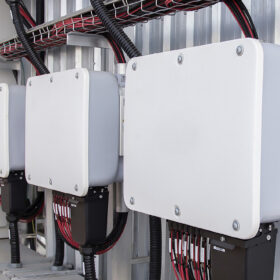
Inverters must withstand the high levels of heat generated when operating, otherwise system performance and reliability could be at risk. Cody Schoener of Dow Performance Silicones argues using silicone-based materials for inverters can improve thermal management and fire protection, while offering thermal stability, environmental resistance, electrical isolation and support for operational efficiency.

Cadmium telluride vs. crystalline silicon in agrivoltaics
Canadian researchers investigated how the transparency of cadmium telluride and crystalline silicon solar panels affects lettuce growth in agrivoltaic systems. They found that 69%–transparent silicon panels increased lettuce yield by 3.6%, whereas cadmium telluride panels led to a reduction in yield.
