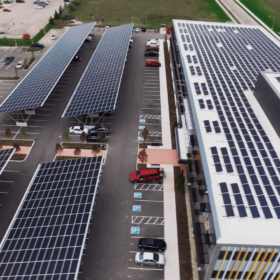
Heliene plans to manufacture 1 GW solar modules, 1.5 GW solar cells in the U.S.
Canadian-based Heliene plans a new factory in Minnesota that will begin producing modules in 2024 and cells in 2025.

Renewed efforts to build solar cells from moondust
Jeff Bezos’ Blue Origin has been awarded $35 million in funding from NASA to improve the company’s commercial solution that produces silicon from lunar regolith. The US spatial agency’s first efforts to build solar cells based on lunar regolith date back to 2005.
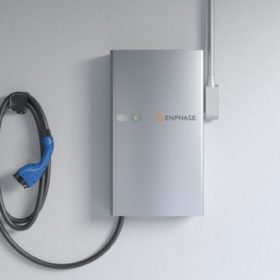
Enphase lowers revenue guidance as US residential solar stagnates
Microinverter supplier Enphase is slipping in share price as revenues dip. It has announced a $1 billion stock buyback program.
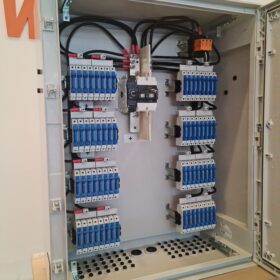
Weidmüller unveils DC combiner boxes for large-scale PV
Weidmüller USA, a manufacturer of electrical connectivity solutions, has introduced new PV DC Combiner Box models for large-scale PV systems in the US.
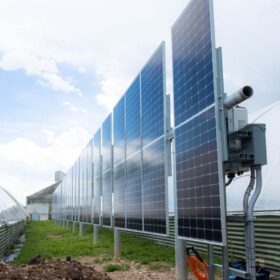
Vertical bifacial solar seeking greenhouse albedo, deployment space
A Colorado farmer has installed vertical bifacial solar, leveraging greenhouse albedo to increase output. The installation demonstrates promising generation during winter months, while maximizing limited land space.

Weekend Read: Much more than Goodenough
The world would have been a different place today had John Goodenough accepted the Shah of Iran’s $7 million offer, in 1974, to carry out solar research. Instead, he secured a job as the head of inorganic chemistry at the University of Oxford. During his tenure, he made a lithium-ion battery discovery that would affect the lives of almost everyone.
RCT Solutions secures order for 10 GW solar module factory in Canada
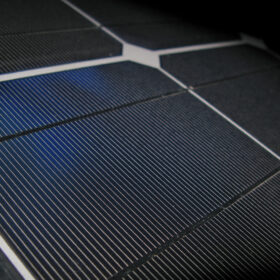
RCT Solutions says it will provide its module production equipment for CAD 3 billion ($2.26 billion) in a 10 GW solar module factory in Manitoba, Canada. The Manitoba provincial government said in a statement that the facility will be fully integrated.

Pressure brings sweltering sun and soaking rain: July extremes in America
In a new weekly update for pv magazine, Solcast, a DNV company, presents the solar irradiance data it collected for North America this month. July’s high pressure in the southwest and trough in the northeast dramatically influenced the region’s solar energy production. Persistent high-pressure systems in the southwest led to frequent clear skies and warm air masses, driving up solar irradiance and enhancing potential solar power generation.
Electrovaya unveils battery tech for high voltage applications, stationary energy storage
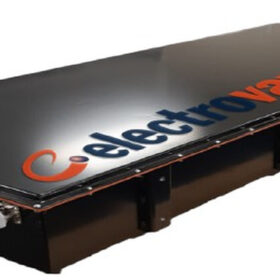
The Canadian battery manufacturer offers the product in two versions with a nominal energy of 35 kWh and 70 kWh, respectively. It claims a projected 25-year lifetime for one-cycle per day applications.
First Solar announces fifth US factory
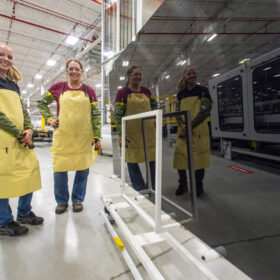
First Solar has revealed plans to open its fifth factory in the United States. The new facility is expected to add 3.5 GW of annual production capacity at a cost of $1.1 billion.
