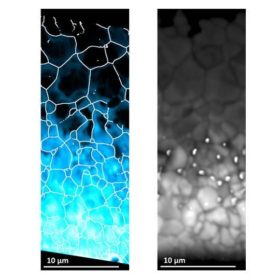
How selenium alloying gives CdTe thin film a boost
A new study conducted by an international team of scientists from leading institutions in the U.K. and the United States provides an explanation as to how the addition of selenide can greatly improve the efficiency of cadmium telluride solar cells. Explaining the performance boost will provide researchers with a route to explore further efficiency improvements, pushing the material’s cost even lower.
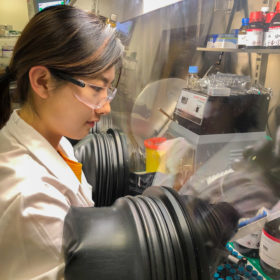
Best of both – quantum dot and perovskites team up for stable performance
Perovskites and quantum dot solar cells both have potential for use in high efficiency PV devices, but have major challenges to overcome to be a commercial reality. Scientists at the University of Toronto have found that if the two technologies are combined in the right way, they can stabilize each other.

US brings Turkish PV modules under Section 201 tariff regime
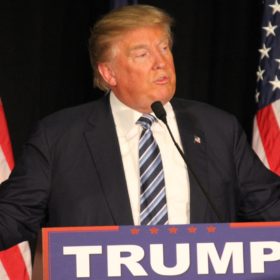
U.S. President Donald Trump has removed Turkey from the list of developing nations that are exempted from Section 201 tariffs on PV cells and modules.

California’s Solar Bill of Rights has been gutted by lawmakers
What was originally a landmark bill to establish rights for the owners of PV systems has made it to the floor of the California Senate in a dramatically reduced form.
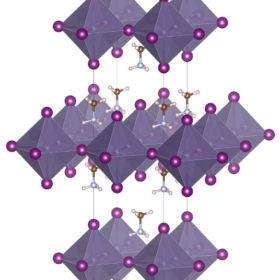
Looking past perovskites
Researchers at the University of California, San Diego – with the help of the university’s Comet supercomputer – modelled thousands of halide compounds to come up with a shortlist of 13 materials that could be candidates for the efficient solar cell materials of the future.
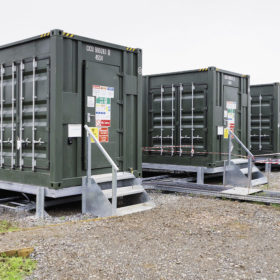
US energy storage market set to almost double this year
The solar-plus-storage combination is super-charging the deployment of batteries across the country and IHS Markit says the U.S. will become the largest market for grid-tied energy storage this year.
US-China trade war may lead to dumping of Chinese steel into India
The contraction in Chinese trade flows to the U.S. is likely to result in the dumping in India of Far Eastern electronic and electrical components as well as steel, iron, chemicals and plastic products.
Little benefit to US solar as Trump lifts Canadian steel and aluminum tariffs
While the lifting of any tariffs is welcome news to the U.S. solar industry, manufacturers say low materials prices are unlikely to return as long as protectionist measures elsewhere remain in place.
SEIA’s solar+ plan falls short on ambition
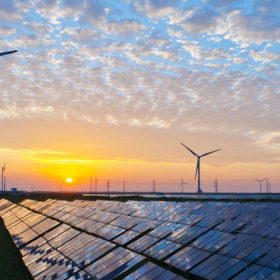
The Solar Energy Industries Association’s “ambitious goal” of solar supplying 20% of U.S. electricity in 2030 looks more like a forecast, and vision for rapid decarbonization is coming from the climate movement and the American Left, not SEIA.
Tesla acquires Maxwell Technologies
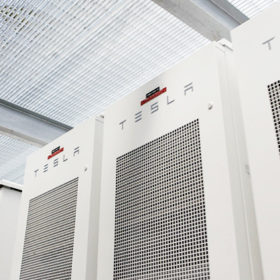
It’s unclear exactly what the interest is in the California-based supercapacitor maker, but it could be more about the process than the product.
