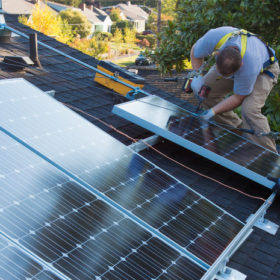
Four-junction tandem thin film cells have strong potential for residential applications, MIT scientists say
Four different thin film solar PV technologies were tested by the MIT experts across three types of environment in the U.S.: Arid (Arizona); temperate (South Dakota); and humid (Florida).

Stanford scientists unveil new manganese-hydrogen battery for storage of wind, solar
The water-based battery relies on a reversible chemical reaction that stores electrons in the form of hydrogen gas. Despite encouraging first results, the prototype developed by the research team now needs to be further developed.
Ontario earmarks $70 million for solar, storage rebates
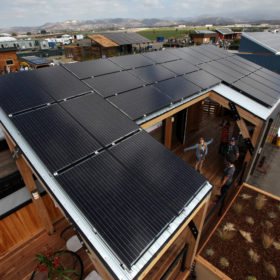
Under the GreenON’s Solar Rebates Program, homeowners will be able to install solar-plus-storage systems with a capacity of up to 10 kW, while businesses will be entitled to deploy up to 500 kW of rooftop PV capacity.
US community solar capacity more than doubles in 2017
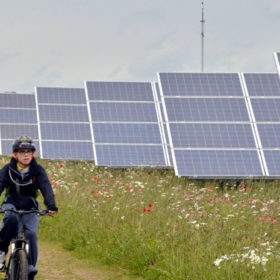
387 MW of community solar projects were installed in the United States last year. This brings the cumulative total to 734 MW, with the majority in Minnesota and Massachusetts.

California blows through solar power, renewable energy output records
California has set a new record for peak output of utility-scale solar at more than 10.5 GW, as well as for renewable energy overall. However, the state’s grid operator is still curtailing solar and wind while hydro and the last nuclear plant run full-steam.

Berkeley Lab scientists discover coating to capture near infrared light
A team of researchers the United States Department of Energy’s Lawrence Berkeley National Laboratory has discovered a method of coating particles with organic dye, which can capture near infrared light, a breakthrough which, according to the researchers, could greatly boost solar cell efficiency by capturing a larger section of the light spectrum.
First Solar still sold out into 2020
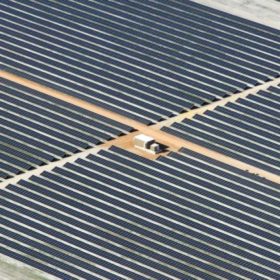
The thin film solar maker is also reviving its EPC division with a goal to build 1 GW of solar projects each year, as well as increasing its presence in O&M services.
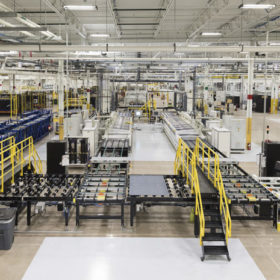
First Solar to build the biggest solar factory in the Western Hemisphere – in Ohio
The 1.2 GW factory will employ 500 workers. The new facility is expected to bring First Solar’s total capacity to 7.6 GW by the end of 2020.
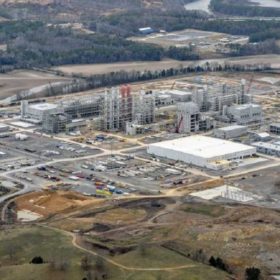
Wacker to restart US polysilicon production
Wacker Chemie AG has said it is gradually ramping up production at its beleaguered U.S. polysilicon production site, with product expected to be again available in Q2. The shutdown has affected its Q1 earnings, with sales down 18% compared to a year ago.
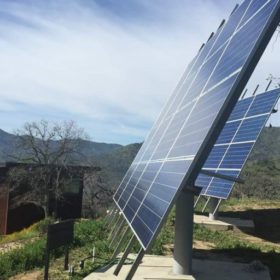
US residential solar power grows 11% in Q1 2018
OhmHome estimates 72,996 residential solar power installations in the first quarter of 2018, with California and Massachusetts growing 14% and 9%, respectively.
