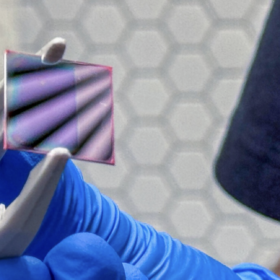
Researchers discover method to significantly extend quantum battery lifespan
Researchers at the Royal Melbourne Institute of Technology (RMIT University) and Australia’s Commonwealth Scientific and Industrial Research Organisation (CSIRO) have developed a way to extend the lifetime of Dicke quantum batteries by up to 1,000 times, while maintaining their fast-charging properties enabled by superradiance.
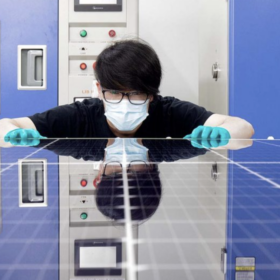
Australia launches solar R&D fund to cut PV costs
The Australian government has announced AUD 60 million ($39.1 million) in new funding for R&D projects that promise to accelerate cost reductions for PV and help meet the stretch target for “ultra low-cost” solar production.
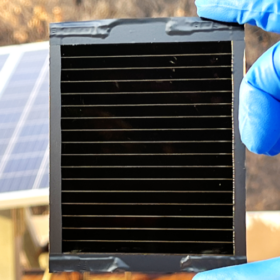
Chinese researchers build 21.60%-efficient perovskite solar modules via blade coating
A research team led by the Dalian Institute of Chemical Physics in China have used tetramethylammonium chloride in the fabrication of perovskite solar cells and modules, demonstrating that it improved both stability and efficiency results. The group’s 10 cm × 8 cm modules achieved certified 21.60% power conversion efficiency. The novel interfacial modification enabled the use of scalable blade coating to deposit both transport layers and the perovskite layer.
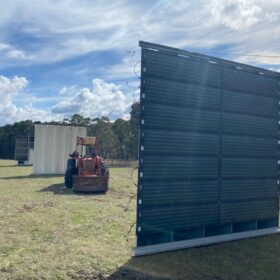
New vertical agrivoltaic system from Australia
Australian company Solspan has unveiled a 6.4 kW vertical solar wall system for applications in agrivoltaic projects. It measures 4 m x 4 m and can be interconnected with other units to create MW-sized systems.

Australia grants major project status to 6 GW power export plan
SunCable has welcomed the Australian federal government’s decision to renew major project status for its Australia-Asia PowerLink, which aims to deliver up to 6 GW of renewable power from the Northern Territory to industries and urban centers in Darwin and Singapore.
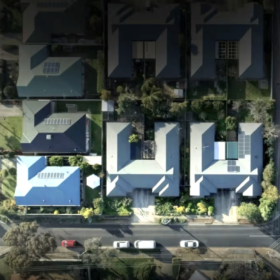
AGL acquires virtual power plant from Tesla in Australia
Australian Gas Light Co. (AGL) has purchased 100% of a public housing virtual power plant (VPP) in South Australia from Tesla, with plans to integrate it with its VPP network on the east coast.
The Hydrogen Stream: EU launches mechanism to match H2 demand, supply
The European Commission has launched the Hydrogen Mechanism to support matching supply and demand under its Energy and Raw Materials Platform, while the US Senate has advanced a budget bill to extend the deadline for 45V hydrogen production tax credits to the end of 2027.
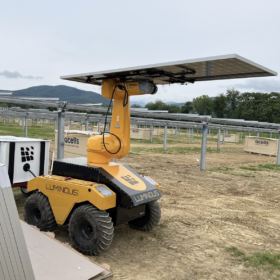
Robotics firm secures Australian federal funds to scale solar construction
Robotics company Luminous has secured almost AUD 5 million ($6.9 billion) in federal government funding to support the deployment of a fleet of AI-powered robots designed to accelerate the construction of utility-scale solar farms.
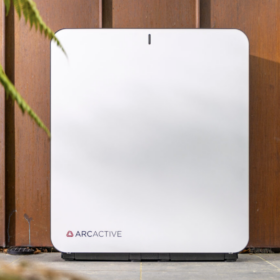
Australian researchers say non-financial barriers limit home battery adoption
A new study from Curtin University in Australia has shown that Australian households are hesitant to adopt home batteries due to significant non-financial barriers, despite growing affordability from government rebates.
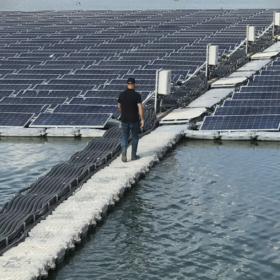
Researchers launch five-year study on floating solar for farm dams
AgEcon Australia has launched a five-year research project to assess the feasibility of floating PV systems on farm irrigation dams in Australia, aiming to reduce water loss, lower on-farm energy costs, and create new income streams for landholders.
