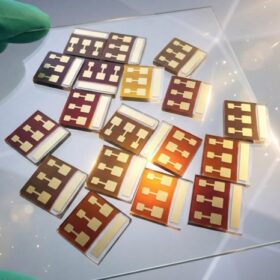
UNSW researchers set new efficiency record of 11.02% for antimony chalcogenide solar cell
The Australian scientists designed the cell with a sodium sulfide additive to achieve uniform sulfur and selenium distribution, improving charge transport.
This controlled elemental layering reduces energy barriers and defects, enabling a certified efficiency of 10.7%.

World’s largest battery-electric ship begins harbor trials in Australia
Incat Tasmania has started harbor trials of the largest battery-electric ship constructed to date. The 130-meter vessel is now moving under its own battery-electric propulsion for the first time.
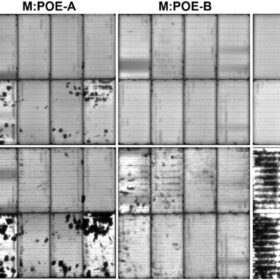
Not all POE encapsulants protect TOPCon solar cells from corrosion
UNSW researchers found that some POE encapsulants can trigger severe corrosion in TOPCon solar modules, causing up to 55% power loss under damp-heat conditions. Their study highlights that module reliability depends on the exact encapsulant formulation, not just the polymer type.

CSIRO puts battery chemistries to test in tropical conditions
Researchers from Australia’s national science agency are working with Malaysian authorities to assess how different battery chemistries perform under tropical conditions, including high temperatures, humidity, and corrosion, and how these factors affect durability, safety, and cost effectiveness.

Australian solar installer fined $6,000 over unsafe battery installs
A solar installation company has been fined $9,000 by an Australian court after pleading guilty to unsafe installation of residential battery energy storage systems at five properties, including one that caused a minor house fire.
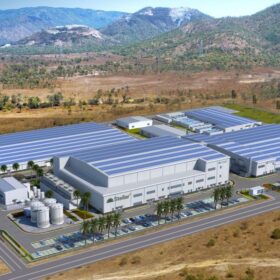
Stellar reveals scale of 2 GW solar ingot and wafer manufacturing plant
Plans to establish Australia’s first commercial-scale solar ingot and wafer manufacturing plant near Townsville in north Queensland are advancing with developer Stellar PV providing an early glimpse of the proposed 2 GW facility.
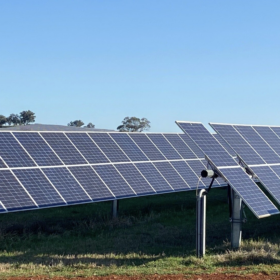
Australia adds 7 GW of renewables in 2025, stays on track for 2030 target
Australian Federal Energy Minister Chris Bowen says the country is on track to meet the government’s flagship target of 82% renewable energy by 2030 after solar, wind, and other renewables supplied about 50% of all power in the electricity grid in the final quarter of 2025.
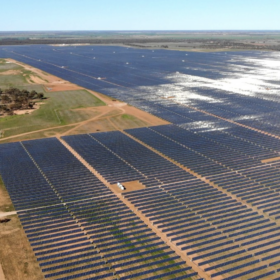
Australian state’s utility-scale solar tops 1 TWh in December
Solar farms in New South Wales led the way for Australia’s utility-scale PV energy output in December 2025, generating 1,052 GWh of renewable electricity.

How to avoid ‘long tail’ effects in large-scale PV plants
New UNSW research found that about 20% of solar modules in large PV plants degrade much faster than expected. They recommend holistic strategies such as robust materials, advanced designs, and proactive monitoring to decouple degradation pathways and prevent cascading failures.
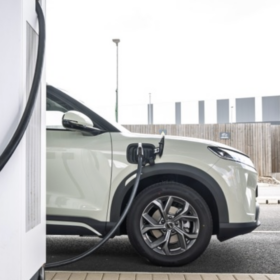
Australia makes gains in electric vehicle uptake
Australia recorded a sharp rise in electric vehicle sales in 2025, with new-car sales data showing nearly 157,000 EVs were purchased nationwide, up 38% from the previous year.
