Pakistan’s solar boom is bigger than official data shows
Pakistan’s Renewables First has explored the implications of a lack of official data collection from the country’s distributed solar market segment, which is estimated to have reached over 24 GW of installed capacity by the middle of last year.
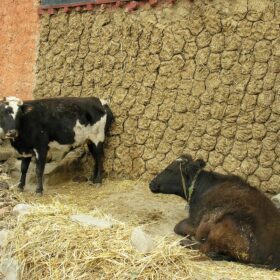
Photovoltaics for cattle dung gasification
Researchers tested a solar PV-powered system to gasify dried cattle dung, achieving higher energy recovery than grid-powered setups.Their techno-economic-environmental analysis shows the approach can cut emissions and be economically viable, though system utilization and operational factors strongly affect profitability.

Pakistan’s installed PV capacity estimated above 27 GW
Pakistan has imported over 50 GW of solar modules from China, including 18 GW during the country’s last fiscal year. In the absence of official installation figures, Islamabad-based thinktank Renewables First says up to 33 GW of solar capacity could have been deployed in Pakistan to date.

New multi‑hotspot detection tech based on Lab* feature descriptor
A Husqvarna researcher developed a fast, interpretable PV hotspot-detection method using IR thermography and Lab* color-space features instead of heavy neural networks, achieving up to 95.2% accuracy with shallow classifiers. The lightweight system works in real time on drones or edge devices and could save 17,620 kWh and 8.9 tons of CO₂ annually by improving fault detection in solar panels.
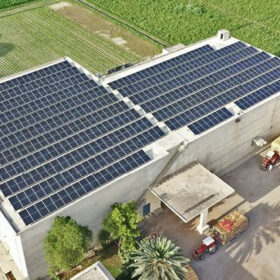
Pakistan unveils new net metering rules for rooftop PV
Pakistan’s National Electric Power Regulatory Authority (NEPRA) has initiated a public consultation on proposed revisions to solar net-metering regulations. A key change under consideration is a reduction in the tariff for surplus solar power, which could be cut by half from PKR 26 ($0.093) per kWh to PKR 13 per kWh.
Hebei Juhang Energy Technology plans solar panel factory in Pakistan
China’s Juhang Energy Technology met with representatives from Pakistan’s Board of Investment to discuss implementation of a solar panel manufacturing facility in Pakistan, aimed at both domestic demand and potential exports.
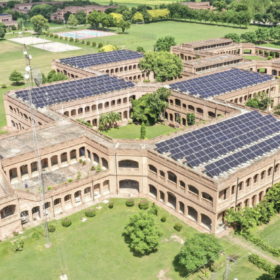
Pakistan needs to declare a ‘battery emergency’
Solar association chair argues urgent battery energy storage deployment is key to supporting continued PV boom in Pakistan. Residential solar CEO predicts surge in behind-the-meter storage demand if and when Pakistan’s generous net metering policy is wound down.
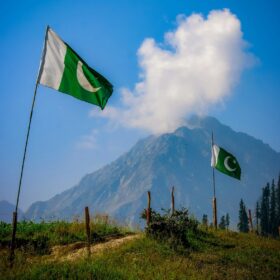
The impact of solar minigrids in rural Pakistan
A research team assessing the social embeddedness of solar minigrids in rural Pakistan found the technology responds to energy poverty while fostering empowerment in communities, leading the team to conclude a minigrid can foster broader societal change while providing a technological solution.

Novel MPPT methodology uses grey wolf hunting as inspiration
Researchers have developed a maximum power point tracking algorithm based on the social hierarchy and hunting strategy of grey wolves. When tested under realistic shading conditions, the grey wolf optimizer achieved an average MPPT efficiency of 98.15%, significantly outperforming conventional MPPT methods.
Pakistan adds 1.2 GW of net-metering capacity in H1
With no utility-scale projects set to come online this year, the growth of Pakistan’s solar market is being driven by net-metering installations. There were over 4,000 new net-metering connections pending by the end of June, with regulatory bottlenecks contributing to a growing backlog.
