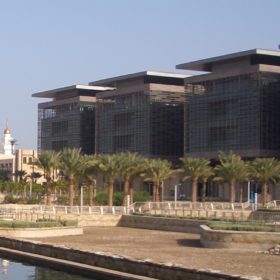
Scientists set new efficiency record for single crystal perovskite
Scientists at Saudi Arabia’s King Abdullah University of Science Technology have set a new efficiency record of 21.09% for a single crystal perovskite. The researchers say this highlights a place for the technology to develop alongside the multicrystalline versions which are progressing toward commercialization.

Saudi Arabia readies initial 1.4 GW tender
The kingdom has revealed 28 Saudi entities are among the 60 bidders when the first four projects of the second round of its National Renewable Energy Program are offered up in just over a week’s time.
Clean water and electricity from one system
Scientists at Saudi Arabia’s King Abdullah University of Science and Technology have demonstrated a system based on commercially available solar panels which can generate electricity and produce clean, drinkable water from seawater or otherwise contaminated sources.
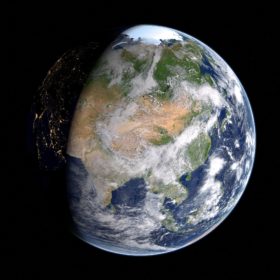
Study examines 7.8 TW solar potential of the Belt and Road route
China’s vast continent-spanning infrastructure project could fertilize solar growth along its perimeter at considerable scale as energy demand in the countries along the route is set to surge.
Saudi Arabia reportedly reduces NREP phase II bidders to around 60 companies
More than 100 domestic developers were interested in the seven-project, 1.515 GW generation capacity second round of the kingdom’s National Renewable Energy Program. That number has been reduced to dozens, according to a briefing note, and a request for proposals is expected within weeks.
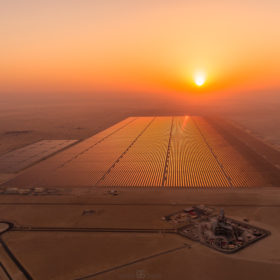
Saudi’s ACWA Renewables sells 49% stake to China’s Silk Road Fund
The Chinese state-owned infrastructure investment fund, which already has strong ties to the Saudi power company, will be a major shareholder in a Middle East and African clean energy portfolio that adds up to 1668 MW of generation capacity.
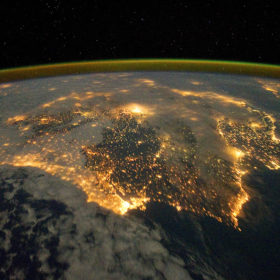
PV leads the way as renewables threaten coal-fired power
With clean energy being generated at lower and lower prices around the world, solar power is playing a leading role in bringing the curtain down on coal, and will help the decarbonization of transport and space heating too.
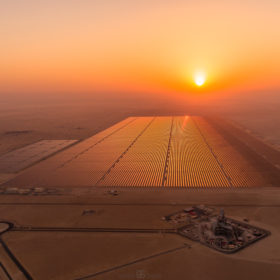
ACWA Power and Shanghai Electric deepen Belt and Road commitment
The two power companies, who worked together on the 700 MW concentrating solar power phase of the Mohammed bin Rashid Al Maktoum Solar Park, have reportedly agreed to develop power generation and desalination projects along the route of China’s new Silk Road.
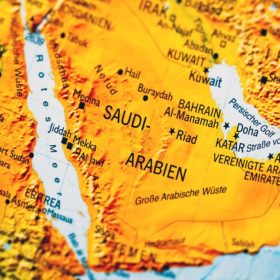
Renewables & geopolitics: Saudi Arabia
In the third in a series of interviews on renewable energy and geopolitics, Indra Overland — head of the Center for Energy Research (NUPI) and a research panel member for the Global Commission on the Geopolitics of the Energy Transition at IRENA — discusses how Saudi Arabia is dealing with the energy transition. He also outlines the challenges the Middle Eastern country will face in the coming decades, as it shifts to a less oil-dependent economy. Although the country recently set new solar and renewable energy targets, Overland believes that the geopolitical balance in the Middle East could shift to countries such as Iran in the coming decades, even if the Saudi commitment to renewable energy proves genuine.
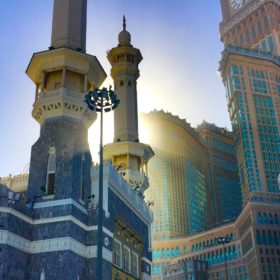
Saudi Arabia plans 2.6 GW solar park near Mecca
The Faisaliah Solar Power Project is planned to be developed in several stages by the Saudi Ministry of Energy, Industry and Mineral Resources and the Development Authority of Mecca. Only 600 MW of the project will be tendered by the REPDO, while the remaining 2 GW will be built by the country’s Public Investment Fund along with its partners.
