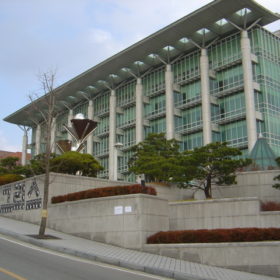
Double-layered anti-reflective coating for heterojunction solar cells
South Korean scientists have developed a novel coating that purportedly reduces average cell reflectance and significantly increases short-circuit current. The coating is based on aluminum oxide and indium tin oxide.
Four-terminal heterojunction perovskite tandem solar cell with 30.09% efficiency
Developed by a Vietnamese-Korean research group, the complex PV device was built with a bottom bifacial crystalline silicon perovskite-filtered heterojunction sub-cell that is able to absorb all solar spectra in the short-wavelength range.

The Hydrogen Stream: Air Liquide eyes South Korea as Cummins announces fuel-cell truck plans
With Australia prepping plans for vast green hydrogen and ammonia production facilities, two of the country’s state governments are trying to drum up the end-user market as agreements are signed to drive use of the gas in Ukraine and Poland.

‘Polysilicon shortage will continue through 2021’
The latest global PV industry outlook published by trade group SolarPower Europe, has indicated tight supply of the solar panel raw material is expected to persist this year but the trade body said it would be unlikely to drive further price rises.
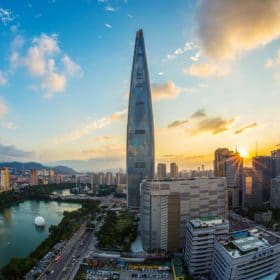
South Korea allocates 2 GW in PV tender, final average price drops to $0.118/kWh
Selected projects will be awarded a fixed rate under a 20-year contract under the country’s renewable energy certificate (REC) scheme and will sell electricity to local power distributors.

Solar module for floating PV from Hyundai
The bifacial panel has a power output of up to 485 W and an efficiency of up to 21%. It relies on a transparent backsheet and is encapsulated with polyolefin elastomer (POE).
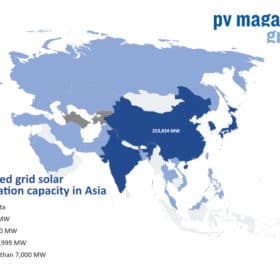
China to add 619 GW of solar this decade
Indonesia will catch the eye too over the next nine years, according to analyst WoodMac, as its market grows from 300 MW to 8.5 GW.

The Hydrogen Stream: Italy’s Eni lays out plans in Algeria and Egypt, UAE joins race with help from Japan
Italian energy company Eni is partnering with local companies in Algeria and Egypt to explore the possibility of producing green and blue hydrogen in the North African countries. The United Arab Emirates is also collaborating with Japanese partners to develop the country’s hydrogen sector, while in New York, hydrogen has arrived in Long Island.
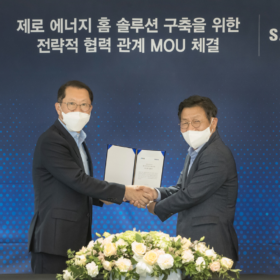
Q Cells, Samsung sign ‘zero energy home’ partnership
Q Cells and Samsung have agreed to combine their hardware and software platforms to develop ‘zero energy homes,’ with on-site energy production and use.
New renewables cheaper than legacy coal or gas for almost half the world’s population
Electricity bill payers in nations as diverse as Germany, Greece, India and China should be aware new solar projects can now generate electricity cheaper for them than legacy coal and gas-fired plants.
