
Renewables may be the victor in Spanish election
Although it is still unclear how the victorious Socialist Party will build a majority in parliament, listed Spanish energy companies such as Solaria and Audax saw the price of their shares rise significantly after the vote.

Tenerife plans 350 MW of solar alongside 1 GWh storage
A new project is in line with the target of the Island Council of Tenerife to cover all electricity demand with renewable energy. The development of electromobility and storage is key to the ambition.

Spain’s new rules for self-consumption come into force
The provisions allow self-consumption for communities and industrial areas; reduce administrative procedures – especially for small self-consumers; and establish a simplified mechanism for the compensation of self-produced excess energy.
Fotowatio could be sold
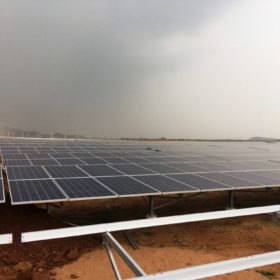
According to Spanish financial newspaper Cinco Días, UAE-based Abdul Latif Jameel Energy is trying to sell Spanish developer Fotowatio Renewable Ventures (FRV), which it acquired just four years ago. Although FRV has decided not to comment on the matter, market sources believe that reports of its impending sale could simply be an attempt to gauge investor appetite.
Foresight secures 10-year solar PPA from ArcelorMittal in Spain
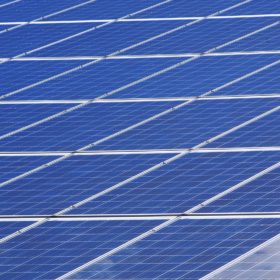
U.K.-based Foresight will sell electricity from two 5 MW solar plants near Toledo to a unit of French steel manufacturer ArcelorMittal. The financial terms of the deal were not disclosed.
Strong growth expected for residential PV in Spain
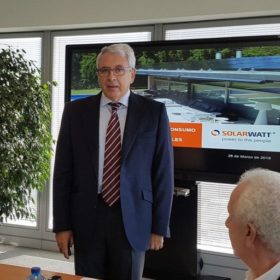
Some 328,000 single-family homes could install rooftop PV systems for self-consumption in Spain, according to a new report published by Solarwatt. This means the country has the potential to deploy around 1.5 GW of residential PV capacity over the next three years.
Iberdrola abandons race to acquire X-Elio
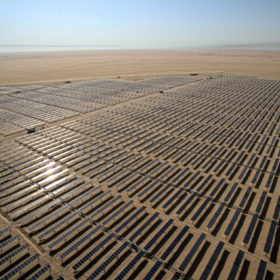
With the Spanish utility out of the game, there are now only three bidders still struggling to take over the PV project developer.

Spanish utility Audax signs up for another 300 MW of solar power
The power company has reportedly moved to expand its Iberian solar portfolio to a huge 1.7 GW with the latest deal, signed with Trina Solar and related to projects planned for the south and east of Spain.
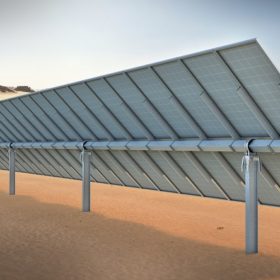
Rise of bifacial lifts profits for the world’s tracker companies
Things are hotting up in the tracker world as the desire to squeeze down the price per Watt of solar power intensifies. And the rise of the trackers is attracting some well-known businesses to buy their way into the field.
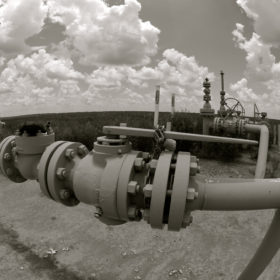
Smart electrification 36% cheaper than green hydrogen in Europe
A report commissioned by the European Climate Foundation suggests a fossil fuel-free energy system in Europe by 2050 should largely rely on smart electrification and energy efficiency. Green hydrogen deployment, the report finds, would require prohibitively expensive infrastructure investment.
