
IFC plans investment in 97 Nigerian minigrids
International Finance Corp. (IFC) plans up to $16 million in financing for Nigerian developer Virtuitis to build and operate 97 solar minigrids, connecting more than 140,000 off-grid consumers by 2027.
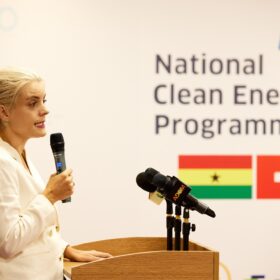
Ghana, Switzerland partner on $200 million rooftop solar rollout
Ghana’s new clean energy program, backed by Switzerland’s Klik Foundation, will install 4,000 rooftop systems totaling 137 MW to expand renewable capacity and cut emissions.

Eswatini runs solar-plus-battery minigrid tender
The energy regulatory authority of Eswatini is searching for a project developer to deliver a solar-plus-battery minigrid facility. The deadline for applications is Dec. 3.

Nigeria, Longi sign deal to build solar panel factory
China’s Longi will support the development of a solar panel production factory up to 1 GW in size in Nigeria, after finalizing a strategic partnership with the country’s energy commission.
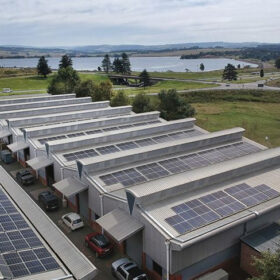
South Africa simplifies registration process for distributed PV
South African utility Eskom is urging consumers with grid-tied rooftop solar to register their systems and integrate them with the national grid, waiving registration fees until March 2026.

DR Congo provides grants for minigrids, solar home systems
The Mwinda Fund is aiming to distribute $500 million in grants for minigrids, solar home systems and clean cooking solutions in DR Congo by 2030. It is already backed by $65 million in funding from the World Bank and $7 million from the Global Energy Alliance for People and Planet.
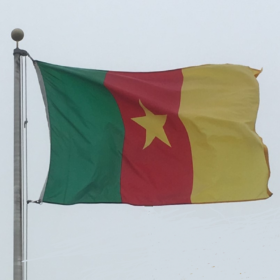
Solar, off-grid systems key to Cameroon’s electrification
An international research team has found Cameroon exhibited a slow but obvious move towards equitable electrification between 2015 and 2024, with an increased focus on distributed renewable energy sources.
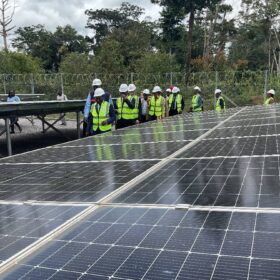
Cameroon, Zambia electrify villages with solar
Cameroon and Zambia are implementing government programs that bring solar minigrids to communities without stable electricity access. Cameroon recently switched on two solar installations to power two villages, while Zambia inaugurated four solar minigrids in the country’s central province.
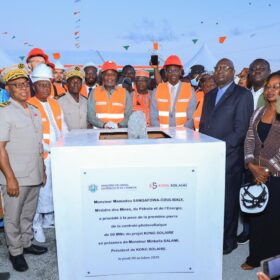
Ivory Coast breaks ground on 50 MW solar project
The 50 MW Kong solar project, being built in the north of the country, is scheduled for commissioning in 2027. It is part of wider plans to have over 1 GW of installed solar by the end of the decade.

Zimbabwe plans competitive bidding for electricity projects
Zimbabwe’s energy regulator plans to introduce competitive bidding exercises for electricity projects from 2026. The announcement coincides with plans to open up Zimbabwe’s electricity retail market to private companies, who will be able to sell and distribute electricity starting next year.
