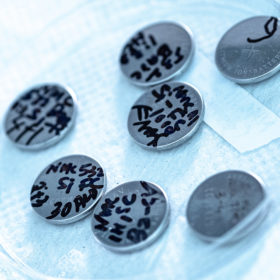
An alumina lining for silicon in storage
Scientists at Rice University in the U.S. have conducted experiments with lithium-ion batteries using silicon as an anode material and made an unexpected discovery regarding an aluminum oxide passivation layer at the cathode. The finding could open up a new pathway toward better performing lithium-ion batteries.

The world will add 142 GW of new solar this year
IHS Markit has predicted another year of global solar growth but a peek behind the headline figures shows uncertainty dogging the markets of China and India, two of the most important markets and biggest polluters.
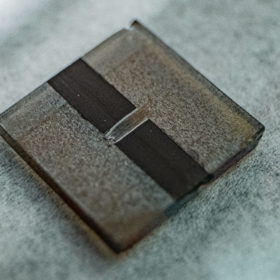
Indium provides a boost to perovskite stability
Scientists at Rice University in the United States have found by strategically adding indium to an all-inorganic, lead-based perovskite, they can reduce the number of defects in the material and improve its efficiency, as well as providing a significant boost to stability.

Questioning the quantum behavior of perovskites
Scientists at the University of Texas at Dallas have made a discovery they say has “altered the understanding of the fundamental properties of perovskite crystals”. Their findings could improve understanding of defect formation in perovskites, leading to devices with enhanced performance and stability.

The ballooning potential of curved solar cells
Researchers in the U.S. claim to have developed a manufacturing process based on the use of a latex balloon that could lead to the production of more efficient curved electronic devices, including hemispherical solar cells.

Texas moves closer to merchant solar
Intersect Power has gone live with news the company has 1.7 GWdc ready for construction in Texas and California, including a project which holds a hedge and no power purchase agreement.
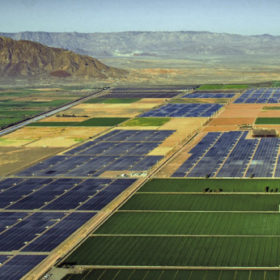
The US tops 37.9 GW of large scale solar
That record figure of utility scale PV was under contract at the end of June with 8.7 GWdc under construction. However, installation levels fell slightly, year-over-year.

Legal firm asks Sunnova investors burnt by IPO to get in touch
First-half losses that ballooned to $85.3 million saw the share price of the Texan third-party solar company fall 8% according to San Diego law firm Robbins Arroyo LLP. The legal business says it is investigating ‘potential violations of federal securities laws’ in connection with last month’s IPO.
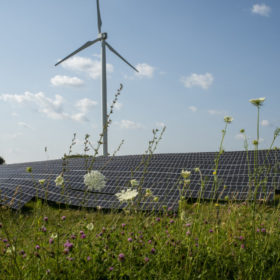
US electricity retailers are ditching fossil fuels
Three different retail electricity providers in the United States have announced new programs to provide customers the option to buy 100% renewably sourced electricity, with one of the three even coming at no additional cost.

China holds key to corporate solar take-up but lags way behind Texas at present
The Lone Star State accounted for almost half of the activity witnessed in the world’s biggest corporate clean energy marketplace but analysts are excited about the prospect of Beijing mandating companies to purchase minimum levels of green electricity.
