
Which power markets are most impacted by the Middle East conflict?
Wood Mackenzie’s latest analysis explores how 13 of the world’s leading power markets are impacted by the current fuel crisis, with those most reliant on fuel imports facing the greatest risk exposure. The consultancy says the average cost of generation is set to increase by $2.30/MWh across these 13 markets if a de-escalation of the conflict enables fuel price moderation in the latter half of 2026, increasing to an average of around $8.30/MWh if current elevated price levels persist through the year.
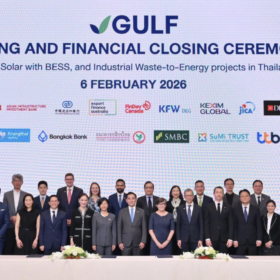
ADB backs $350 million for three solar-plus-storage projects in Thailand
The Asian Development Bank (ADB) has approved a $350 million loan to Gulf Renewable Energy to build 194 MW of solar capacity, including two battery-integrated projects, in central Thailand.
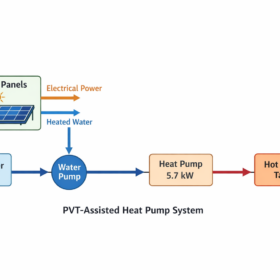
How to improve indirect-expansion PVT-assisted heat pump performance
Scientists in Thailand have simulated an indirect-expansion photovoltaic-thermal-assisted heat pump and measured its performance under various cold water temperatures and tank sizes.

Thailand develops solar plan for community power supply
Thailand’s Ministry of Energy says it is advancing a community solar plan to add up to 1.5 GW of capacity through small ground-mounted projects selling power to local consumers at THB 2.25 ($0.07)/kWh under long-term contracts.

IEA says cost of capital for solar remains high in Southeast Asia
The International Energy Agency (IEA) says the cost of capital for solar remains higher in Southeast Asian countries than it does in other emerging and developing economies.

Solar and wind integration crucial as Southeast Asia electricity demand grows
The International Energy Agency’s latest report says solar and wind energy are well placed to meet Southeast Asia’s growing electricity demand. It adds that while additional deployment will create flexibility challenges, most countries in the region can integrate more solar and wind energy without requiring major system changes.

The Hydrogen Stream: Japanese researchers develop low-temperature hydrogen battery
Institute of Science Tokyo researchers proposed a battery with magnesium hydride (MgH2) as the anode and hydrogen (H2) gas as the cathode. Meanwhile, researchers at Chung-Ang University proposed chloride-resistant ruthenium (Ru)-based nanocatalysts for direct electrolysis and hydrogen production from seawater.

Thailand opens 364 MW solar tender
The Electricity Generating Authority of Thailand (EGAT) has kicked off a tender for a floating solar project at the Srinagarind Dam, already home to one of its power stations. Interested bidders can purchase tender documents until Sept. 26.
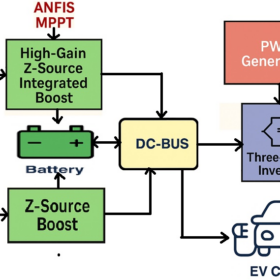
Novel MPPT technique for EV charging combined with PV, fuel cells
Scientists in India have designed a system that uses PV panels, a proton-exchange membrane fuel cell, battery storage, and a supercapacitor. It also relies on an adaptive neuro-fuzzy inference system-based MPPT that reportedly achieves an efficiency of 98.7%.
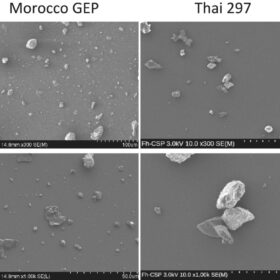
Different dust, different impact on PV module performance
Scientists in Germany have collected dust from Qatar, Morocco and Thailand to analyze the impact on the performance of uncoated solar glass and uncoated PV mini-modules. Their analysis has shown that dust coverage could range from 4% to 60%.
