Abu Dhabi extends solar self-supply policy to residents
The UAE capital is expanding its solar self-supply policy to the residential sector, after first launching for the agricultural sector in February.
UAE installs around 1 GW of solar in 2025
Analysis from GlobalData finds the UAE’s cumulative solar capacity increased from 5.7 GW to around 6.7 GW last year. The country’s annual solar deployments are forecast to increase in the coming years, with 20 GW of installed solar expected by the end of the decade.

Abu Dhabi unveils solar-plus-storage self-supply policy
The Abu Dhabi Department of Energy has introduced a policy designed to support deployment of solar systems for self-consumption, with the first phase of the policy targeting the agricultural sector.
UAE’s massive solar-plus-storage project set to redefine baseload power, says Wood Mackenzie
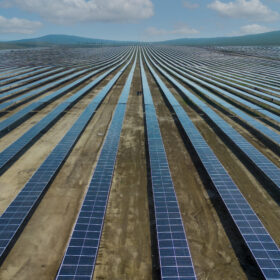
Wood Mackenzie highlights a groundbreaking 5.2 GW solar-plus-storage project in the UAE capable of delivering 1 GW of continuous baseload power, signaling a potential shift in renewable energy deployment despite high costs. The report also forecasts strong global solar growth through 2030, including the rise of residential “balcony solar” in the U.S. and expanded solar shares in Asia Pacific and the U.S.
New software identifies optimal rooftops for C&I solar
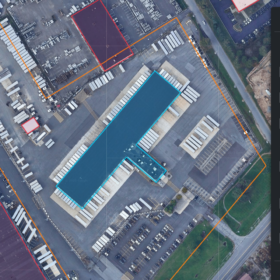
United Arab Emirates software specialist Planno has launched software to automate prospecting for roof surface sites with potential for solar PV generation.
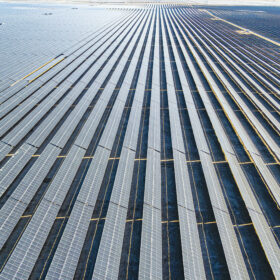
Green bonds totaling $870 million issued for 2 GW solar project in UAE
Joint owners of the 2 GW Al Dhafra solar power plant Abu Dhabi National Energy Company, Abu Dhabi Future Energy Company, EDF Power Solutions and Jinko Power, alongside offtaker Emirates Water and Electricity Company, have issued the green bonds to refinance the plant’s existing debt obligations and support its continued operation.
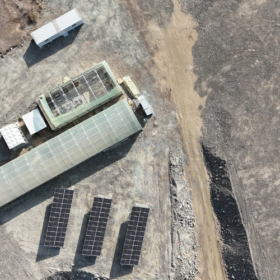
Strengthening food and energy resilience with agri-PV
A first-of-its-kind agrivoltaic pilot in Fujairah, developed as part of a joint research project between the Fujairah Research Center and AE Solar, shows how solar panels above native plants can improve soil health, boost crop resilience, and optimize land use – demonstrating a scalable approach to tackling a desert region’s energy, food, and water challenges.
Sensorless approach for PV panel temperature monitoring
Researchers in United Arab Emirates have developed a novel model that relies on either the open-circuit voltage or the maximum power point voltage to estimate PV module operating temperature without using sensors.
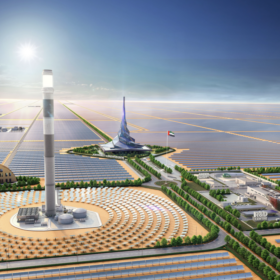
Dubai expands storage in seventh phase of world’s largest solar park
Dubai Electricity and Water Authority (DEWA) says the seventh phase of the Mohammed bin Rashid Al Maktoum Solar Park will pair 2 GW of solar with 1.4 GW of storage, up from 1 GW, after receiving 49 expressions of interest under its 2050 clean energy plan.

Masdar, EWEC break ground on 1 GW baseload solar-plus-storage project
Abu Dhabi Future Energy Co. (Masdar) and Emirates Water and Electricity Co. (EWEC) have started building a solar-plus-storage project in Abu Dhabi that will deliver 1 GW of continuous baseload energy from a 5.2 GW solar plant paired with a 19 GWh battery system.
