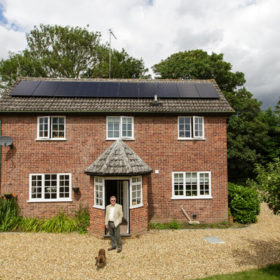
UK government figures show 902 MW year-on-year solar growth
For the 11 months up to the end of November, the U.K. added 902 MW of solar PV capacity to reach a cumulative total of 12,642 MW, which is around 7% higher than last year.
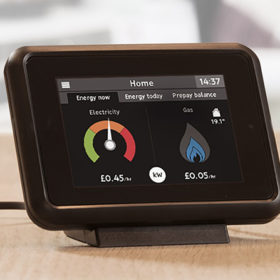
Shell snaps up British energy firm First Utility
Acquisition of the British company by Dutch-British oil giant Shell will support growth of First Utility’s smart energy solutions and aid incorporation of battery technology and renewables, company CFO says.

Scotland’s first energy strategy draws mixed feelings from solar industry
While solar has been recognized in Scotland’s first energy strategy, which aims to supply half of the country’s energy needs from renewables by 2030, criticism has been aimed at the lack of concrete policy frameworks for solar, an energy source that could add 6 GW capacity in the next 12 years.

Oxford PV receives €15 million financing from EIB
Perovskite solar start up, Oxford PV has received €15 million in financing from the European Investment Bank (EIB), to support its efforts at commercialization of silicon/perovskite tandem solar cell production.
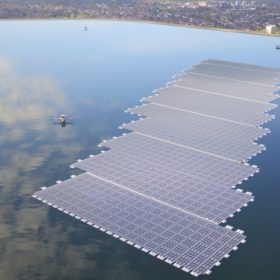
Malaysian pension fund acquires 45% stake in 365 MW PV portfolio
European renewable energy investment platform Vortex, has sold a 45% equity stake in Vortex Solar Investments to Kumpulan Wang Persaraan (KWAP), Malaysia’s second largest pension fund, in a GBP 67.5 million transaction.
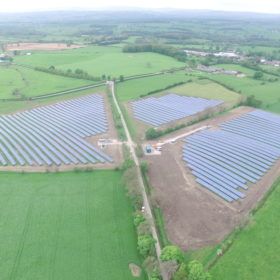
Wirsol to acquire two ‘subsidy free’ solar projects in the UK
Wirsol has announced the acquisition of two solar projects totaling 16 MW, which are gearing up to begin construction in the U.K. Wirsol also says it has plans to expand this portfolio to around 150 MW over the next 18 months.
BP returns to PV with $200 million investment in Lightsource
British Petroleum makes first move in PV since 2012 with acquisition of 43% stake in British renewables firm Lightsource.

Idea of solar powered trains gaining traction
In two separate studies, in the U.K. and Switzerland, respectively, the notion of combining solar power and trains has been explored. The results indicate it could offer a cost-competitive, energy saving alternative to the traditional power methods currently employed.
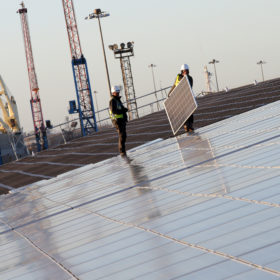
Associated British Ports to scale up its solar portfolio to 28 MW
The UK’s port operator has announced plans to build a 20 MW solar array on multiple warehouses at the Port of Immingham. Custom Solar has been contracted to install solar panels.
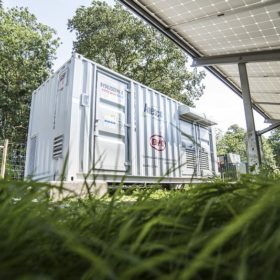
UK could reach 12 GW storage capacity within five years, report finds
Lessons learned from solar failures could propel battery storage market to 12 GW by 2021, argues report by All-Party Parliamentary Group on Energy Storage, which implores government to be “on the front foot” when it comes to seizing ways to ensure energy security for the nation.
