Covid-19 weekly round-up: US job losses raise concern but France and China continued to add new solar
Cell supply shortages could kick-start manufacturing activity in India, EV car sales are braced for a fall while still gaining market share and a new date has been set for the world’s biggest solar trade show.

A pressure-assisted technique to increase perovskite solar cell efficiency
Researchers in the United States claim to have significantly increased the efficiency of a perovskite solar cell by applying a range of pressures to the device. According to them, pressure-assisted processes such as lamination, cold welding and rolling/roll-to-roll processing can be used to improve interfacial surface contacts in perovskite cells.
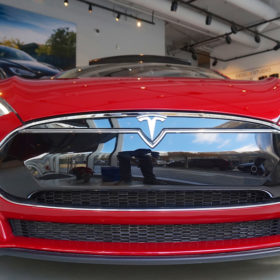
Battery electric vehicle sales in UK were outpacing hybrids – before Covid-19 struck
Pure EVs had begun to claim a rising market share before coronavirus containment measures decimated sales last month. Even in the face of an 88% monthly fall in EV sales from March to April, however, clean energy models fared better than petrol and diesel sales.
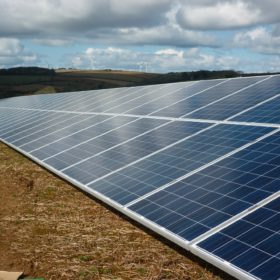
Unsubsidized 350 MW PV project in the UK
Hive Energy has been planning the Cleve Hill Solar Park since 2017. It now expects to secure final approval from the U.K. Department for Business, Energy and Industrial Strategy by the end of this month.
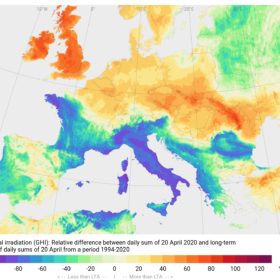
European solar records will continue to tumble this summer
Solar forecasting company Solargis says the insight offered by Covid-19 industrial shutdowns into a renewables-driven future serves to emphasize the value of the chief commodity it trades in – data.
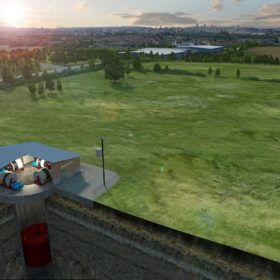
Storing wind and solar with new gravity-based system
Scottish start-up Gravitricity is planning a project to store surplus power from renewables at Port of Leith. A 250 kW, grid-connected prototype facility will have its ability to stabilize the network tested. The system involves a 16m rig over a 150-1500m shaft.

Solar canopies can put PV panels in some new and interesting places
A major advantage of this design is the ability to string cables over a longer distance without the support needed in traditional racking approaches.
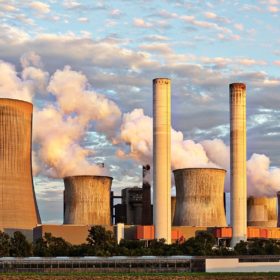
Covid-19 weekly briefing: Evidence abounds of renewable energy gains at the expense of fossil fuels as the clamor for a green recovery rises
Portugal set a new coal-free record because of the pandemic as Belgium and Israel moved to help the renewables industry. But there was grim news in Mexico and Turkey, and Bangladeshi clean energy firms have appealed for more assistance.
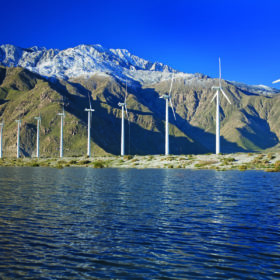
Storing solar and wind energy with compressed air
Researchers have studied the potential of using compressed air to store renewable energy in offshore saline aquifers. The technology could hold 77-96 TWh for up to two months in British waters, although the costs have proven hard to pin down.
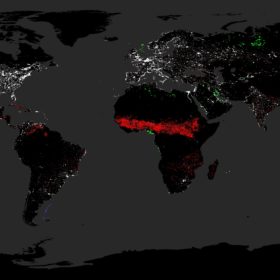
Tackling climate change with machine learning: Covid-19 and the energy transition
The effect the coronavirus pandemic is having on energy systems and environmental policy in Europe was discussed at a recent machine learning and climate change workshop, along with the help artificial intelligence can offer to those planning electricity access in Africa.
