
Solar cells from space are on the way
A team at the U.S. National Renewable Energy Laboratory has come up with a new process that would reduce the production cost of highly expensive – and highly efficient – gallium arsenide cells.
First Solar reaches $350m legal settlement with shareholders to halt 2012 lawsuit
The U.S. thin-film manufacturer continues to deny having misled stockholders over solar module defects between 2008 and 2012 and said the settlement had been reached to close the historic legal action and permit the company to remove the uncertainty associated with it.

A new perovskite material for solar applications
Barium zirconium sulfide is another chalcogenide perovskite being tested in relation to the development of more efficient solar cells. Researchers at Buffalo University, in New York state, have created a thin-film based on the material they say offers significant light absorption and good charge transport.

The world will add 142 GW of new solar this year
IHS Markit has predicted another year of global solar growth but a peek behind the headline figures shows uncertainty dogging the markets of China and India, two of the most important markets and biggest polluters.
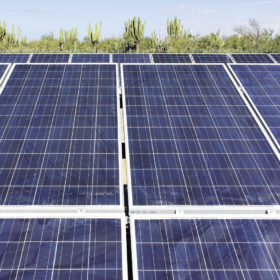
Repowering solar plants for need – or bigger returns
Alencon’s silicon carbide-based String Power Optimizers and Transmitters enable the repowering of solar plants which need to replace 600 V inverters with newer 1,000 V or 1,500 V gear, or for project owners who wish to maximize electricity generation at aging and imperfect facilities with creative engineering techniques.
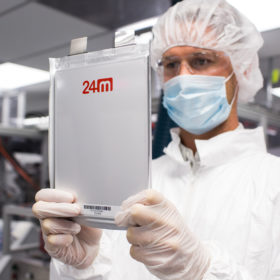
Kyocera to launch world first SemiSolid lithium-ion battery
The Japanese electronics giant is offering a new cell architecture developed by battery start-up 24M, in the U.S., which significantly improves battery economics. Kyocera will be the first company to bring the technology to market.
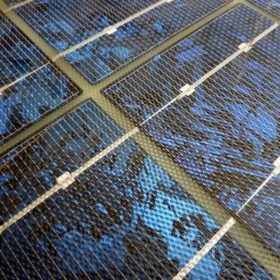
US scientists claim clear-sky irradiance model provides better results for module testing
Researchers at the American Institute of Physics have used the clear-sky irradiance model developed by the National Renewable Energy Laboratory to measure the degradation rates of solar panels at a testing field in Germany over five years. The scientists say the model, when combined with real-world data, offers an efficient tool to evaluate the aging of PV technology.

What to expect for solar from the US-Iran crisis?
Three days after the drone attack ordered by the U.S. which killed Iranian power broker Qassem Suleimani, energy forecasting service AleaSoft said the price of Brent was rising again today. The potential shake out of rising oil costs for the solar industry is difficult to predict.

PV against brain and heart diseases
Researchers in Denmark have developed water-based nanofibers coated with a biological PV substance which can be easily injected into the body. The developers say excitable cells in the heart and brain could be regenerated by being electrically stimulated with the solution.
Solar-plus-storage will start to make big inroads in the year ahead
By this time next year we may be able to wave goodbye to that old chestnut about renewables endangering security of supply. Elsewhere, the price of lithium – and the products it goes into – could go either way after tanking this year.
