
Accelerated growth for French solar market, 1.36 GW of new PV systems deployed in H1
The French solar market is currently being driven by the utility-scale segment. In the first quarter of the year, newly deployed PV systems totaled 713 MW and in the second quarter their combined capacity reached 654 MW.

German researchers want to reduce manufacturing costs for electrolysers by more than 25%
A number of Fraunhofer institutes in Germany want to make green hydrogen more cost-competitive and are working to identify the best and most economical processes for the production of electrolyzers. They intend to build a digital library of future-proof electrolyser manufacturing processes with which the investment costs and even the return on investment can be determined in advance depending on the planned production volume.

Spanish consortium wants to simplify hydrogen production through photoelectrocatalysis
Spanish energy giants Repsol and Enagás are planning to build an electrolyzer based on photoelectrocatalysis at an industrial complex owned by the oil company in Puertollano in 2024. The device receives direct solar radiation and with a photoactive material it generates the electrical charges that cause the separation of the water molecule into hydrogen and oxygen.

Mini organic solar module with 13.94% efficiency
The panel is based on 14.9%-efficient organic PV cells with a surface of 1.1 cm2 that the same research group unveiled in September 2020. The solar cells were interconnected using laser structuring.
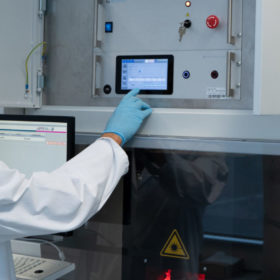
Fraunhofer CSP develops repair process for PERC solar cells
The performance of the solar cell contacts can be improved with laser-assisted current treatment. The process does not damage the solar cells but only optimizes faulty semiconductor-metal contacts.
Australia grid delays affect Dutch developer’s figures
Photon Energy reported raised revenue from sales of electricity in the second quarter of the year, compared with 12 months earlier, but said grid hold-ups at 14.6 MW of solar projects Down Under had affected performance.
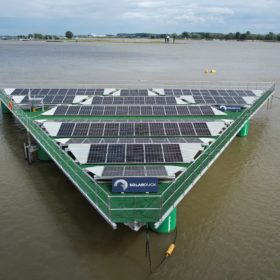
Offshore photovoltaics a step closer
Dutch start-up SolarDuck has secured approval-in-principle for its floating offshore platforms. Its 64 kW pilot project on the inshore water of the Netherlands’ widest river was validated by Bureau Veritas.

France approves new climate law, including several measures to support PV
The Climate and Resilience Law was officially promulgated and published in the official journal on August 24. For solar, several measures could have a direct impact on the development of projects in the years to come.
Heat pump control strategy for solar assisted district heating
Researchers in Spain have proposed two control strategies for the integration of heat pumps in district heating systems assisted by solar thermal collectors. Their technical-economic analysis shows that the proposed combination can reduce reliance on gas while also reducing costs.
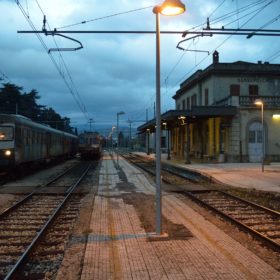
The Hydrogen Stream: Green hydrogen for Italy’s Apennine railway, new plans from Ukraine, Estonia, Canada
Spanish energy giant Iberdrola will lead a consortium that plans to convert the Apennine railway axis in central Italy to green hydrogen. Ukrainian energy company NJSC Naftogaz has said it wants to produce green hydrogen with a German partner, and the Port of Tallinn, in Estonia, wants to become a hydrogen hub.
