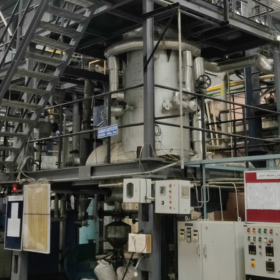
The Hydrogen Stream: Steam-based tech to produce 100 g of hydrogen from 1 kg of biomass
Researchers from the Indian Institute of Science (IISc) developed a two-phase hydrogen production technology that is capable of using steam to produce hydrogen from biomass. Furthermore, an Indian-Norwegian consortium is developing green ammonia in Oman, Toshiba is starting research on hydrogen production from geothermal energy, and Thyssengas is selecting personnel for the conversion of around 20% of its gas network.
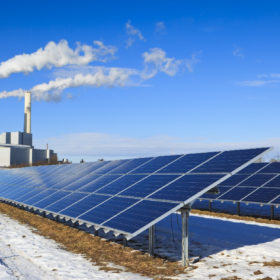
Solar power costs continued to fall in 2021, despite rising panel prices
The average global price of solar kilowatt-hours fell 13% on 2020’s prices, as around two-thirds of the renewables capacity installed last year was cheaper than the lowest-cost fossil fuel alternative.
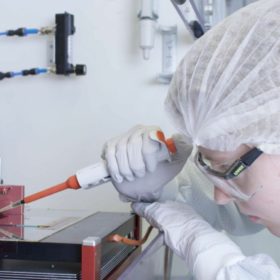
Eco-friendly solvent for a 16.7% perovskite solar cell
Scientists in Germany looked to eliminate the use of toxic solvents in the production of perovskite solar cells, replacing them with a more environmentally material called dimethyl sulfoxide (DMSO) which has so far proved difficult to integrate into processes suitable for large-scale production. The group demonstrated a scalable blade coating process using DMSO as the only solvent, and reached cell efficiencies close to those achieved using more toxic substances.

Shipping costs remain key challenge for solar sector
The solar industry will face elevated shipping costs and supply disruptions for at least another year until the global ocean freight system starts to normalize.
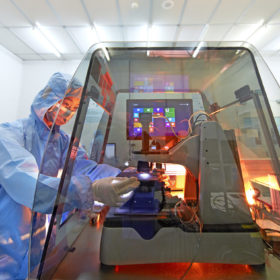
Trina Solar achieves 24.5% efficiency for 210 mm p-type PERC solar cell
Trina Solar said the State Key Laboratory of PV Science and Technology in China has confirmed the efficiency rating of its latest solar panel.
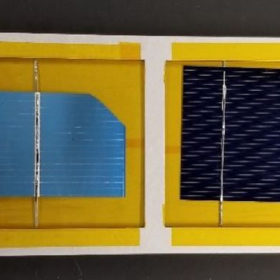
Role of UV in solar cell degradation
US scientists have tested a range of modern cell designs under strong ultraviolet light and have found that many of them, including p-type PERC and n-type heterojunction cells, are more susceptible to degradation than older back surface field designs. They noted that the rear side of bifacial cells may be particularly vulnerable.

The Hydrogen Stream: Global electrolyzer market to reach 8.5 GW by 2026
GlobalData has predicted that the global electrolyzer market will hit 8.52 GW by 2026. BP and Thyssenkrupp have agreed to cooperate on the use of hydrogen in the steel sector, while electrolyzer supplier Nel Hydrogen has secured orders in Australia and Denmark.
Technology to navigate a slowing economy and achieve solar installation growth
Supply chain issues, increased interest rates, and a slowing economy are mounting pressures on solar installers today. Many of these economic conditions are out of our control, but there are several tools at the disposal of solar installers to continue growing their business.
In this pv magazine Webinar, together with our partner Aurora Solar, we will demonstrate how solar installers can continue to grow their solar businesses by improving the things that are within their control.
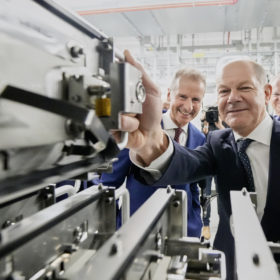
The mobility rEVolution: Volkswagen starts building battery cell plant
Volkswagen has started constructing its first battery cell factory in Germany, while Northvolt has raised $1.1 billion for a new battery gigafactory. Mercedes-Benz, meanwhile, has agreed to send second-life batteries to Canada for use in stationary storage applications.
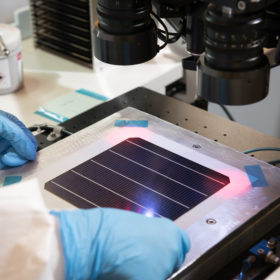
Environmental impacts of perovskite PV
A life-cycle analysis of perovskite-silicon tandem modules indicates that additional environmental impacts in manufacturing are more than offset by the higher energy yield over their lifetime.
