
4: Wrapping it up
Despite the rollercoaster of emotions experienced throughout the year, the final quarter of 2018 wrapped up on a relatively positive note, with the scrapping of Spain’s sun tax, and ambitious goals either announced or reaffirmed. Read on to discover what happened in the months of October to December.

3: PV’s day of judgement
China continued to take center stage in Q3 2018; however the focus shifted from its now notorious policy change. In both positive and negative news, Europe announced the end of the MIP, at almost the same time as the United States slapped tariffs on Chinese imports of inverters, AC modules and non-lithium batteries. Yin yang. Ping pong.
2: And let the solar games commence
While China’s PV policy announcement dominated the headlines in Q2 2018, there were a lot of other significant happenings in the world of solar, not least the EU’s 32% renewable energy targets, rumors of U.S. tariffs on inverters, PV records in Germany, and unexpected new partnerships. Read on to discover the highlights from April to June.
1: What a difference a year (in PV) makes
Dire warnings about the state of our planet characterized 2018, with a plethora of reports released calling for climate action. The solar PV, and storage, industries have a leading role to play in the required energy transition: this bold quest was taken on by many over the last year, with technological progress and expansion seen upstream and downstream, and in policy, globally. Like last year, China took all by surprise, this time, however, in the form of its abrupt 31/5 policy change, the effects of which are still being felt in almost every corner of every market. And of course, Tesla grabbed the headlines – also for rather more unsavory reasons than in 2017. In this first out of a total of four posts pv magazine reflects on Q1.

2018 pv magazine Annual Award winners announced
pv magazine is pleased to announce the winners of our inaugural Annual Award. Winners will be recognized in a ceremony alongside the Middle East Solar Industry Associations’ Solar Awards, during the World Future Energy Summit.

The outlook is sunny for solar in 2019, according to Credit Suisse
Although the investment bank says large manufacturers will suffer from continuing panel price falls, developers will be able to take advantage and experts predict a resurgence in the global market next year.
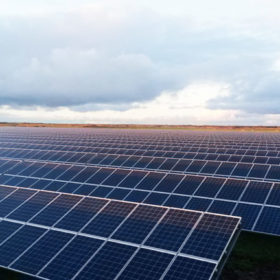
2019 PV installations to hit 123 GW, global balance shifting, says IHS Markit
More predictions from IHS Markit reveal that 123 GW of solar PV installations are expected in 2019 – up 18% on the capacity additions expected this year. It also sees a market shift away from China, with two thirds of capacity located elsewhere. The overcapacity situation is also expected to ease.

Energy storage inverter shipments to reach 3 GW in 2018, 7 GW in 2022
According to IHS Markit, energy storage inverter shipments are on track to reach 3 GW in 2018, growing to 7 GW by 2022. Currently, SMA is the market leader. Overall, the competitive landscape is “highly volatile” with expectations that consolidation will continue.

Efficiency record isn’t the biggest change for Alta Devices’ GaAS solar technology
Alta Devices’ gallium arsenide solar research cells have been certified with a 29.1% efficiency, setting a new single junction solar cell efficiency record. The most significant change, however, isn’t actually the efficiency; it is that the weight fell 30%, and from the words of Alta Devices, its process has lowered material costs to “essentially nothing”.

Solar not in COP24’s spotlight
As the dust settles on an imperfect, but still welcome, international agreement thrashed out at COP 24, the chairman of the European Energy Research Alliance has criticized the solar industry for its lack of representation in Katowice.
