
The weekend read: Cell manufacturer ranking
pv magazine teams up with solar market analysts at IHS Markit to run through the top 10 crystalline silicon cell manufacturers of 2017, and the events that shaped their market landscape throughout the year.

Data is driving change – adapt or fall off the grid
As global economies develop, and uses for renewable energy diversifies, new pressures are being placed on the electric network. Yet, utilities are sitting on a wealth of data that can reveal better insights into their operations, writes Dan Beasley, Director, Utilities, Cyient.
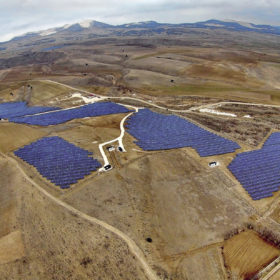
Fossil fuel global grip being loosened by holy trinity of affordable PV, wind and storage, finds BNEF
‘Unprecedented challenge’ for fossil fuels as low LCOE for solar and wind power, allied to tumbling storage costs, sees renewables claim larger share of bulk and dispatchable generation while adding vital flexibility to global energy mix.
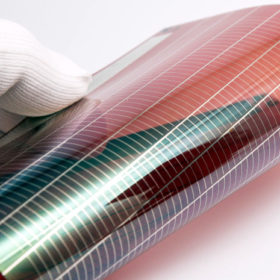
DuPont and Envision join forces to develop new degradation analytics for solar modules
Solar materials producer DuPont Photovoltaics Solutions to cooperate with Internet of Things pioneer in big energy data Envision to develop effective degradation analysis for solar modules.
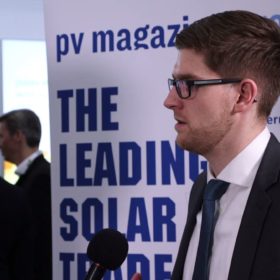
Video Interview: IHS Markit talks sector coupling, storage trends at Energy Storage Europe
IHS Markit’s senior market analyst for energy storage Julian Jansen discusses the role that South Korean battery producers play in the global storage chain, and sees reasons to be bullish for Europe’s own storage market.
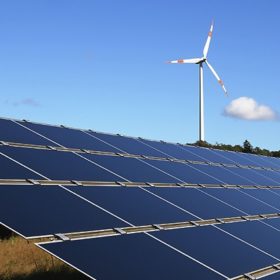
Energy demand growth doubles in 2017; wind, solar see a banner year – IEA
As global energy demand went up by 2.1% in 2017, more than twice that of 2016, renewables saw the highest growth rate of any energy source, meeting a quarter of global energy demand. According to preliminary estimates from the IEA, solar PV accounted for 27% of the growth in renewables-based power output last year.
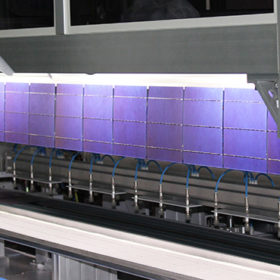
The 9th ITRPV: Module price pressure to continue as production capacity tops 130 GWp, price learning curve rises to 22.8%
Annual International Roadmap for Photovoltaics, compiled by the German production equipment industrial association (VDMA), reveals slowdown in module price reduction for 2017 in contrast to significant market increase that saw module production capacity rise above 130 GW.
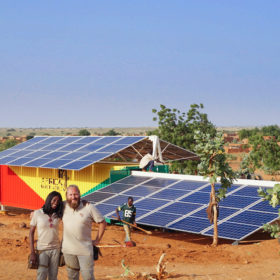
IFC, EIB and EBRD commit $424.5 million in green bonds for emerging markets
Three of the world’s leading development finance institutions (DFIs) commit US$424.5 million of investment in green bonds, specifically for developing markets.

The sun shines brighter if the risks don’t cloud it
Finance in developing countries: Economics teaches that capital flows from where it is in surplus to where it is in demand. But that is not the case with renewable energy. The biggest pots of institutional capital in advanced economies are not shifting to developing ones. It is time to take a hard look and develop solutions that resolve this anomaly.
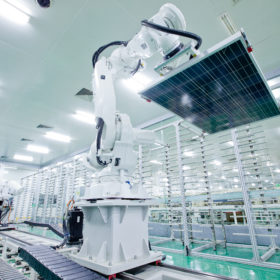
Q&A: JinkoSolar discusses half cut cells, multi-busbars and bifacial technology
Ahead of its upcoming webinar, on March 27, JinkoSolar’s Head of Technical Service Europe, Andrea Viaro, discusses the company’s new Half Cell (HC) Series, the benefits of multi-busbar and bifacial technology, and upcoming innovations, in a Q&A with pv magazine.
