
Bangladesh to complete 7.4 MW of solar capacity in April
A 7.4 MW solar plant will start generating electricity next month in Rangamati, in Bangladesh’s Chittagong Division.
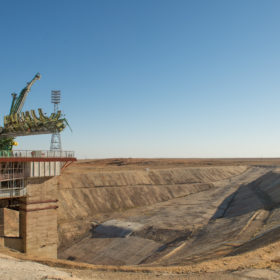
ADB provides $11.5 million for 50 MW PV project in Kazakhstan
The Asian Development Bank has signed an agreement to finance a project in the south of the central Asian nation.

Cambodia’s utility tenders first, 60 MW, section of National Solar Park
Electricité du Cambodge has launched an international tender to procure a solar project in Kampong Chhnang province, on a build-own-operate basis. The project is the initial phase of the 100 MW National Solar Park, which is being supported by the Asian Development Bank.

Cambodia’s 100 MW National Solar Park project moves forward
The Asian Development Bank, which is backing the plant, is seeking project consultants. If built, the solar park would improve the country’s limited power supply and bring technical benefits to the national grid.

Bangladesh prepares plans for two floating solar plants
Backing from the Asian Development Bank will help a 50 MW project get off the ground – and onto the water – in Chittagong, and a developer has been lined up to install solar on a stretch of the Padma river.

ADB invests $155 million in Thai green bonds
The bank continues its involvement in Thailands largest IPP B.Grimm, which is set to grow its renewable energy portfolio. According to ADB, the green bond proceeds will go to nine operational solar PV plants with a cumulative rating of 67.7 MW, and 30.8 MW that are currently still under construction.

Funding the key obstacle to renewables in Asia
Banks categorize renewable energy projects as risky and believe they offer lower rates of return than fossil fuel schemes, making them reluctant lenders.
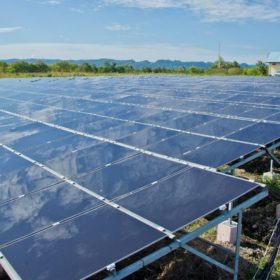
ADB finances its first utility-scale PV plant in $160 million deal
Asia’s largest IPP receives funds to develop renewable energy assets in line with Indonesia’s plans to increase renewable generation to 23% by 2025. The ADB’s support for PV at this scale is novel and could help overcome financing gaps that have hindered PV development in emerging nations
EBRD arranges financing for 50 MW project in Kazakhstan
The European Bank for Reconstruction and Development (EBRD) has announced it will work alongside the Clean Technology Fund and Asian Development Bank to provide a loan for the construction of a 50 MW solar power plant in Kazakhstan’s central Baikonur region.
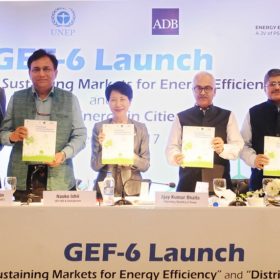
Global Environment Facility along with ADB will provide $454 million funding to EESL clean energy projects
Energy Efficiency Services Limited EESL’s projects, under one of the largest funding by Global Environment Facility (GEF) to date, will mitigate 60 million tons of CO2 emissions. UN Environment’s ‘District Energy in Cities’ initiative already identified $600 million of energy efficiency projects across five cities in India.
