
Sun’s out, load’s gone: The evolution of Australia’s National Electricity Market
Q4 2025 in South Australia saw grid-connected loads with spot price exposure actually being paid to use electricity about half the time (46%) – and that electricity was overwhelmingly (80%) supplied by renewables. This demonstrates a shift from managing demand to quietly needing it. Particularly in regions like South Australia, there is growing demand for demand.

Cyclones and unseasonal polar winds shape Australia’s solar resource in March
In a new weekly update for pv magazine, Solcast, a DNV company, reports that March in Australia was unusually wet and disrupted, with frequent tropical cyclones, polar air intrusions, and repeated low-pressure systems causing widespread cloud, storms, and record cold in the southeast. Solar irradiance was mixed: below average in the south due to persistent cloud and storms, but near or above average on some northern and coastal regions where breaks between systems allowed recovery.

Fortescue fast-tracks delivery of ‘world first’ off-grid project combining solar, wind, up to 5 GWh of BESS
The rollout is accelerated to eliminate the use of diesel from iron ore mining and processing.
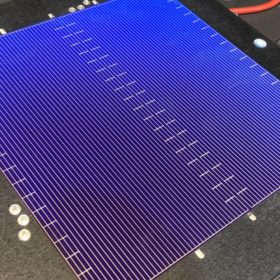
The impact of annealing on copper-plated heterojunction solar cells
A UNSW-led team found that annealing conditions significantly affect stress, strain, and microstructure in copper-plated heterojunction solar cell contacts, with fast annealing increasing microstrain in both copper and indium tin oxide.

How to detect PV system underperformance using only AC-side inverter data
An Australian research team has developed a five-step, rule-based method that detects and classifies underperformance in PV systems using only AC-side inverter data. Validated across more than 1,000 systems, the approach offers a low-cost, low-intervention solution for improving reliability, fault response, and PV system performance.
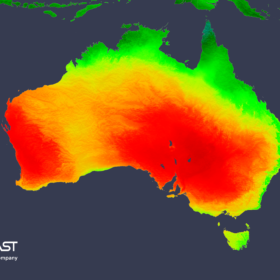
Hot, dry start to 2026 lifts Australian PV, despite fires and monsoon losses
In a new weekly update for pv magazine, Solcast, a DNV company, reports that most of Australia experienced above-average solar irradiance in January 2026 due to a hot, dry airmass and clear skies, boosting PV generation despite operational challenges from elevated temperatures, bushfire smoke, and dust. In contrast, northern Queensland and far northern regions saw significant irradiance deficits from persistent monsoonal clouds and Tropical Cyclone Koji, causing widespread rainfall and localized power outages.
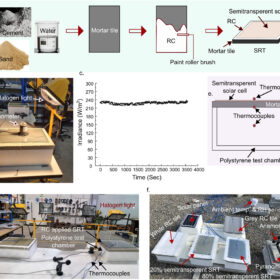
New reflective coating increases BIPV power output by 11%
Australian researchers developed a low-cost reflective coating for semi-transparent solar roof tiles that lowers surface temperatures by up to 20 C and boosts power output by up to 11.7%. Simulations across five global cities showed energy savings of up to 5.85%, highlighting the coating’s strong potential for improving both building cooling efficiency and solar performance in BIPV systems.
‘An immediate transition to copper is technically and economically feasible’
With silver prices rising, more large solar manufacturers are expected to switch to copper for cell metallization. Radovan Kopecek of ISC Konstanz tells pv magazine that he expects the entire industry to follow. Ning Song of the University of New South Wales says a small efficiency tradeoff may be acceptable if the cost savings are significant and do not introduce new reliability risks.

CSIRO puts battery chemistries to test in tropical conditions
Researchers from Australia’s national science agency are working with Malaysian authorities to assess how different battery chemistries perform under tropical conditions, including high temperatures, humidity, and corrosion, and how these factors affect durability, safety, and cost effectiveness.
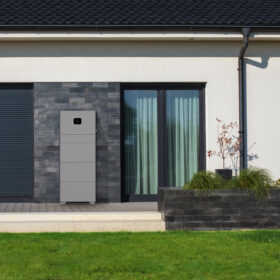
Ambrion launches new all-in-one storage solutions
The Australian firm has introduced single-phase 5 kW and 6 kW AC output storage systems, as well as three-phase 10 kW and 12 kW models. Storage capacities of the new products range from 5 kWh to 40 kWh.
