
Energy company plans 500 MW of solar in Chad
Savannah Energy plans to install up to 300 MW of solar and a battery to power operations at its recently acquired Doba Oil project in Chad. It has also pledged up to 100 MW of solar and the same amount of wind to generate power for the capital, N’Djamena.
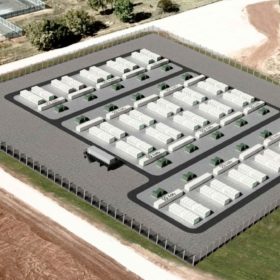
Tesla to supply Megapacks for new 150MW/350MWh Australian big battery
Following the early success of its solar integrated Gannawarra Energy Storage System, Edify Energy has again opted for Tesla Megapack as its preferred battery energy storage system for its combination of storage projects totalling 150MW/300MWh in the Australian state of New South Wales.
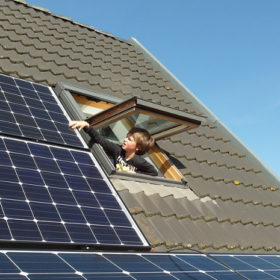
Residential based energy storage will become the new ‘Boiler 2.0
Residential-based energy storage will become the new ‘Boiler 2.0’ and could form part of a virtual power plant, providing a viable solution to the global energy crisis and helping us to achieve our net-zero goals.
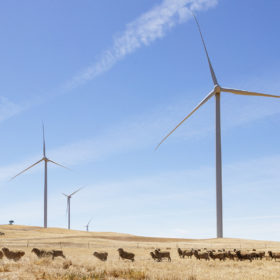
Neoen’s 204MW/34MWh Bulgana project points to co-located renewables future
French renewable developer and IPP Neoen announced the completion of its Bulgana wind-plus-storage project in the Australian state of Victoria. Having now installed more than 650MW of large-scale solar, wind, and battery storage in the state, the developer has pointed to its “well balanced” renewable portfolio in Victoria including an additional 2GW of projects in the pipeline.

Canadian Solar signs deal for 1.5 GW/3 GWh of UK batteries
English clean energy company Windel Energy will develop the projects until they are ready-to-build, with Canadian Solar expected to supply the batteries.
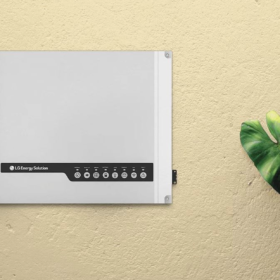
LG launches hybrid inverter for residential battery range
South Korean battery manufacturer LG Energy Solution has launched a new inverter in the Australian market, adding a 5 kW hybrid inverter to its Residential Energy Storage Unit (RESU) Home battery energy storage range.
Mining giant unveils AU$73m solar-plus-storage project
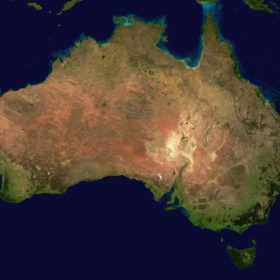
Mining giant BHP has taken another step on the path towards a renewable energy future, commissioning a 48.2 MW solar-plus-storage hybrid power facility that will help power its Nickel West mining operations in regional Western Australia.
Australia’s energy storage installed base to grow more than five times by 2030
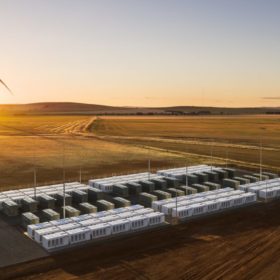
In its latest report, IHS Markit predicts that energy storage installations in Australia will grow from 500 MW to more than 12.8 GW by 2030. Today, Australia makes up less than 3% of total global installations for battery energy storage and is the seventh largest market globally. By 2030, it is forecast to comprise 7% of global installations and become the third largest market. This growth will be largely driven by three distinct market segments: residential, standalone front-of-the-meter, and collocated with utility-scale renewables.
Battery testing builds certainty
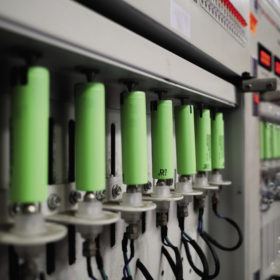
Owners and operators of energy storage systems, as well as investors, need transparent ways to evaluate battery performance. They need certainty that the selected batteries for their ESS projects will perform reliably, have predictable life expectancies, and meet projected revenue and contractual obligations over their lifetimes. The economic viability of entire projects depend on this confidence, writes Michael Kleinberg of DNV.
Saft opens 480 MWh battery manufacturing hub in China
The company is answering the growing demand for storage systems in virtually all markets. China itself is on a steep trajectory to increase its deployment rate.
