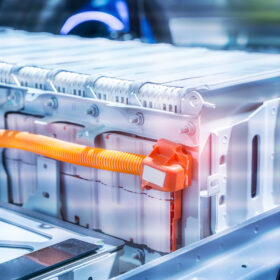
The Battery Cycle: NMC, LFP, LTO – What’s the difference?
With battery storage such a crucial aspect of the energy transition, lithium-ion (li-ion) batteries are frequently referenced but what is the difference between NMC (nickel-manganese-cobalt), LFP (lithium ferro-phosphate), and LTO (lithium-titanium-oxide) devices and their underlying chemistry?

UK coal-fired power plant site to host 1,040 MW/ 2,080 MWh battery
Independent energy infrastructure developer Carlton Power has secured planning consent for a 1,040 MW/ 2,080 MWh battery energy storage system (BESS). The project is expected to strengthen the resilience of the energy system in northwestern England.
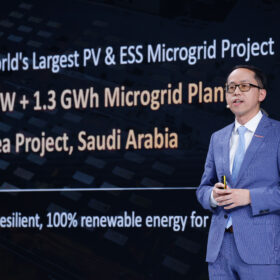
Making the most of every ray: Exclusive interview with Huawei’s Guoguang Chen
In this exclusive interview with pv magazine, Guoguang Chen, President of Smart PV & ESS Business at Huawei Digital Power, in this, discusses company strategy and recent announcements around FusionSolar, latest technology and product innovations in solar and storage, and more.
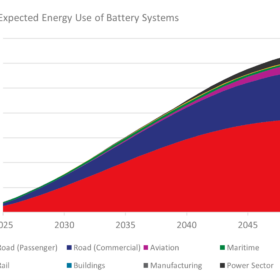
Role of hydrogen, batteries in UK’s decarbonization efforts
Hydrogen and battery technologies are expected to play an increasingly vital role in the UK’s transition to net zero by 2050, but the varying time scales of their rollouts are driving uncertainty in predicted market share profiles over time, according to a new report.
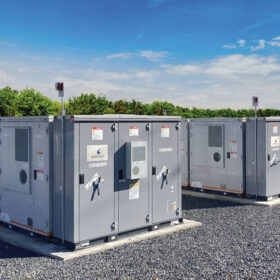
Weekend read: Pathfinders for grid stability
Non-synchronous renewable energy affects grid stability but storage-as-transmission (SAT) assets offer grid companies a trump card. Whether it’s “virtual transmission” in Australia, Germany’s “Grid Booster” program, or the giga-scale pipeline of projects emerging in the United Kingdom, energy storage is finding a way.
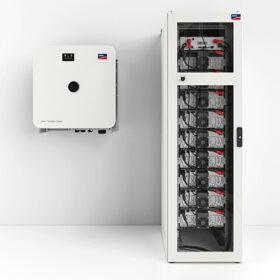
SMA unveils new commercial battery storage solution
Germany’s SMA has developed a modular lithium-ion solution for commercial storage applications. It comes in two versions, with capacities of 32 kWh and 56 kWh. The two variants feature SMA Sunny Tripower Storage X battery inverters, with up to 8,000 complete charge cycles.
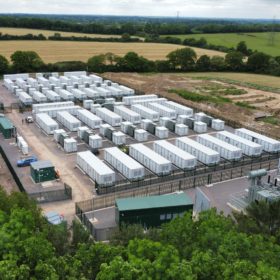
UK power capacity auctions turbocharging battery storage sector
Battery energy storage saw a major increase in contracted capacity in British auctions this year, with many utility-scale projects securing long-term deals. The business case, however, is not as strong for all storage durations.
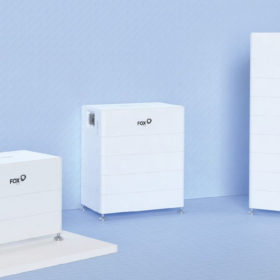
Weekend Read: Dawn of the store-age
Last year was another landmark 12 months for energy storage, with all indicators pointing to a massive surge in demand. Supply chain instability and inflation saw battery prices rise but the industry demonstrated an ability to swiftly react to geopolitical developments. We look at five trends driving the market.
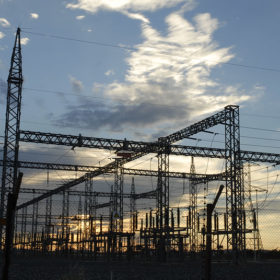
South Africa’s Eskom kicks off 36.5 MW/146 MWh storage tender
South African utility Eskom aims to develop 35 MW/140 MWh of battery storage capacity at its substations in Eastern Cape province. The tender will also accept bids for a 1.5 MW/6 MWh storage system, plus 2.04 MW of solar PV at another substation. Eskom started building the country’s first battery energy storage system (BESS) last week.
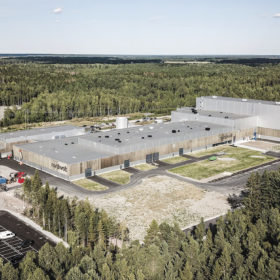
Weekend read: Strategies for battery procurement
The worst effects of the pandemic may have passed but supply chain disruptions continue to be felt across the world. The effects of the war in Ukraine are also evident to all of us in our daily lives, from commodities to energy, food supply chains and beyond. The disruption in the battery energy storage system (BESS) supply chain is no different, writes Cormac O’Laoire, senior manager of market intelligence at Clean Energy Associates. Indeed, as the cost of raw materials such as lithium climbs, battery prices are being driven materially higher, on some accounts by 20% to 30%, rendering some projects uneconomical.
