Valmont becomes largest shareholder of Brazilian PV company Solbras
The parent of Italian tracker business Convert has entered the Brazilian solar market with plans for agri-business products and other systems.

Brazil hits 5 GW milestone
In Brazil, like in many other parts of the world, industry associations claim that solar will be a strategic element in the recovery from the Covid-19 crisis, due to its potential to create jobs, generate income, and attract new investment.
Amerisolar plans new 200 MW solar panel factory in Brazil
Chinese manufacturer Amerisolar and Brazilian energy company Nova Renováveis are planning to set up a 200 MW solar module manufacturing facility in Belo Horizonte, in the Minas Gerais state.

Brazil postpones energy auctions
The Ministry of Mines and Energy has delayed auctions to procure new transmission as well as generation capacity and has not announced when they will resume.

How Covid-19 is affecting the Brazilian PV sector
Brazilian consultancy Greener has conducted a survey of more than 500 solar companies in Brazil to assess the economic impact of the Covid-19 pandemic. The results show that demand has already started to slow down, and that PV system prices are on the rise.
More solar power deals pop up in Latin America
Big clean energy supply contracts have been announced in Brazil, Mexico and the Dominican Republic.

A 20-year power supply deal for 238 MW of solar in Brazil
French developer Voltalia has contracted to supply solar power to Brazilian thermoplastic resin company Braskem. The solar plant which will generate the electricity is planned as an expansion of two facilities allocated by the Brazilian government in a public renewable energy auction.
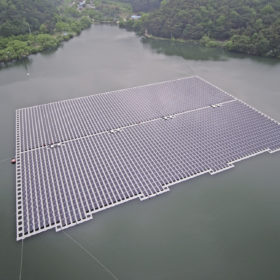
Brazilian hydropower dam to host 30 MW of floating solar
Tractebel will develop the basic design of three floating PV projects at the 52.2 MW Batalha hydropower project, which is owned by Brazilian state-run power company Eletrobras Furnas.

5.5 GW of unsubsidized solar for Brazil
The pipeline of large-scale solar projects that are not being planned to compete in public auctions is growing significantly in Brazil, according to a report by consultancy Greener. The study also reveals that all of these projects have already secured a permit to start commercial operations, and that they are located in six states, including Minas Gerais, Sao Paulo and Ceará.

Central Bank of Brazil launches two more solar tenders
Brazil’s biggest lender wants to secure solar power through a leasing arrangement. The central bank expects to buy around 8 GWh of electricity per year for its agencies in the state of Bahia and another 2 GWh in Ceará.
