
Putting China’s electricity market reforms on the spot
A report by the U.S.-based Rocky Mountain Institute has modeled scenarios for the deregulation of electricity markets in China. The report finds the implementation of a spot market would drive increased integration of renewables and provide significant reductions in costs and emissions.

IEA urges advanced economies to support nuclear as renewables cost continues to fall
An International Energy Agency report estimates the share of nuclear power in advanced economies could fall by two-thirds by 2040, as aging plants retire. The report claims without support for nuclear, the transition to a low carbon energy system would be far more complex and threaten global emissions targets.
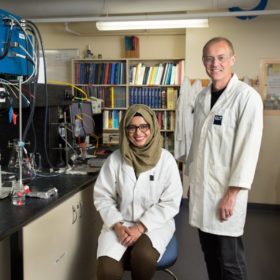
Australia’s QUT discovers process to lower the cost of renewable hydrogen
Hydrogen holds promise for harnessing renewables to produce clean fuel for transport, growing a green energy-export industry, and overcoming seasonal intermittency challenges in the grid. On the road to viable hydrogen production every cost-efficiency measure counts.
IPCC: 1.5°C limit needs rapid and far-reaching action, but enables SDG progress
The Intergovernmental Panel on Climate Change (IPCC) has released a new report on different ways global warming can be kept within the 1.5°C limit. The panel seeks to inform policymakers before the upcoming COP24 in Poland this December. Resulting from their analysis, the 91 authors state that drastic action and significant investments are needed. Such climate action across all sectors would have significant positive effects on sustainable development progress, they say.
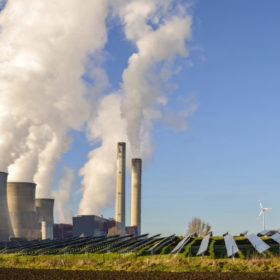
Banks turn their back on coal amid emissions concerns
While global coal mining companies are enjoying the highest prices in years on the back of boosted Asian demand, banks and financiers are increasingly ending their support for coal power. London-based Standard Chartered the latest to stop financing new coal-fired stations.
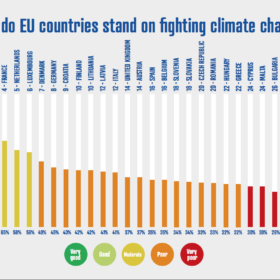
Most EU countries fail to work towards climate goals – CAN Europe
According to a new report released by Climate Action Network (CAN) Europe, no single EU country is performing sufficiently in both showing ambition and making progress in reducing carbon emissions, thus casting a long shadow over the Paris Agreement objectives. Sweden is leading the charge in fighting climate change, followed by Portugal and France.
Energy demand growth doubles in 2017; wind, solar see a banner year – IEA
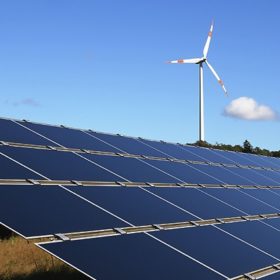
As global energy demand went up by 2.1% in 2017, more than twice that of 2016, renewables saw the highest growth rate of any energy source, meeting a quarter of global energy demand. According to preliminary estimates from the IEA, solar PV accounted for 27% of the growth in renewables-based power output last year.
US could suffer recession-era economic losses if climate change remains unchecked, study finds
Inequality will widen with many poorer parts of the US on course to see their income reduced by 20% if climate change continues to accelerate.
