
Arup report outlines potential of PV and the circular economy
As the world responds to the climate crisis and ramps up investment in solar energy, the industry is still struggling to address sustainability. A new Arup Group report on Australia looks at how the country can apply circular economy principles to current and future PV waste management.

The state of solar sustainability
As part of pv magazine’s UP initiative, we asked our readers how they felt about sustainability in solar, whether they or their customers were willing to do something about it, and how they saw the conflicting goal of profitability.
Towards circular business models for the PV sector
With solar energy about to reach the iconic terawatt (TW) milestone of globally installed PV capacity, waste handling and end-of-life (EoL) scenarios become a pressing matter.
Bigging UP the carbon-free pioneers: Step forward 3S Solar Plus
pv magazine’s UP campaign aims to highlight industry movers who embrace carbon reduction and the circular economy in their operations and Swiss BIPV manufacturer 3S Solar Plus boasts an impressive sustainability record.
Lithium-ion recycling rates far higher than some statistics suggest
While it is often stated only 5% of lithium-ion batteries are recycled, a review of research into the second life and recycling of lithium-ion batteries suggests that is a gross understatement. A new study found almost 100,000 tons of waste batteries were recycled last year – about half of what reached end-of-life.
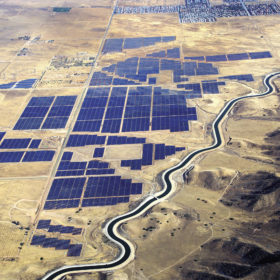
The weekend read: The sustainable pioneers
In the coming weeks, months, and years, pv magazine will be digging deeper and expanding our sustainability horizons, defining – with your help – the most effective courses of action. What follows is an overview of current sustainability initiatives in the solar and, to a lesser extent, storage industries.
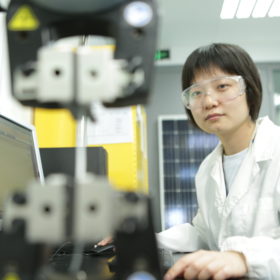
Interview: DSM’s circular solar ambitions
The notion of a circular economy is gaining traction, both in and out of the solar and storage industries. Recently, the European Commission wrote, “The circular economy is now an irreversible global trend,” and there are many initiatives taking place around the world to build a more circular society. As part of our new UP campaign, pv magazine spoke with material solutions provider DSM Advanced Solar to see what it is doing in this area.
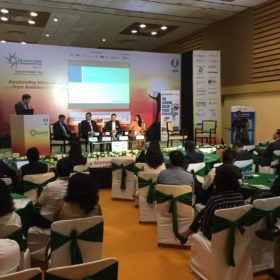
Video: Future PV Roundtable REI 2018
Reporting from the first Future PV Roundtable in India, pv magazine learned about the technological innovation that will drive tomorrow’s PV arrays.

Report eyes alternative battery technologies due to socio-ecological concerns
Lead, sulphuric-acid, nickel, cobalt and rare earth metals are highly toxic and have adverse impacts on the environment and the societies in which they are mined. As the EU is looking to become a world leader in battery production, a report considers new battery technologies – such as sodium-ion – which would have less negative impacts.
