
‘No alternative to 100% renewables’
Transition to a world run entirely on clean energy – together with the implementation of natural climate solutions – is the only way to halt climate change and keep the global temperature rise below 1.5°C, according to another significant study.

Solar not in COP24’s spotlight
As the dust settles on an imperfect, but still welcome, international agreement thrashed out at COP 24, the chairman of the European Energy Research Alliance has criticized the solar industry for its lack of representation in Katowice.
2035: The renewable energy tipping point
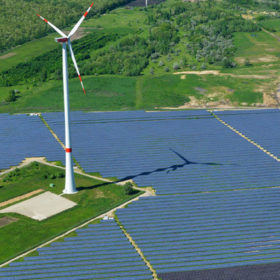
The tipping point, where the world shifts from oil and gas to renewables, will be the year 2035, says Wood Mackenzie. This is when renewables and electric-based technologies converge, with around 20% of global power needs being met by solar or wind, and roughly 20% of miles traveled by cars, trucks, buses and bikes using electricity. Will the transition come soon enough, however?

Washington DC 100% renewables bill could supercharge solar
A bill is moving through the DC council to set a more aggressive renewable energy target than any state has yet approved, and to shift the city to solar.

IPCC: 1.5°C limit needs rapid and far-reaching action, but enables SDG progress
The Intergovernmental Panel on Climate Change (IPCC) has released a new report on different ways global warming can be kept within the 1.5°C limit. The panel seeks to inform policymakers before the upcoming COP24 in Poland this December. Resulting from their analysis, the 91 authors state that drastic action and significant investments are needed. Such climate action across all sectors would have significant positive effects on sustainable development progress, they say.
Africa: UK announces £56 million for battery storage, support for solar
The U.K. Government says it will make £56 million available for battery storage technologies in South Africa. Nigeria also saw the next phase of the U.K.-Nigeria Climate Finance Accelerator unveiled; while the continent as a whole, is set to benefit from further partnerships and investment in both solar and climate change.
UK’s decarbonization depends on continued growth of EVs, RE, storage – National Grid
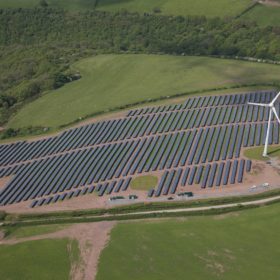
Outlining energy pathways for the next 30 years and beyond, the U.K.’s National Grid has released four different scenarios, considering growing electricity demand and a significant increase in energy infrastructure from new renewable generation and EV charging networks. Only two of them meet the U.K.’s 2050 carbon reduction target on the back of a large growth of renewables and energy storage, and almost completely decarbonized transport.
Most EU countries fail to work towards climate goals – CAN Europe
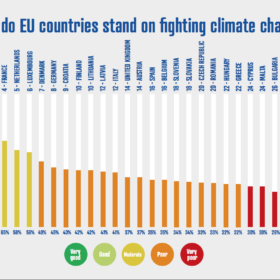
According to a new report released by Climate Action Network (CAN) Europe, no single EU country is performing sufficiently in both showing ambition and making progress in reducing carbon emissions, thus casting a long shadow over the Paris Agreement objectives. Sweden is leading the charge in fighting climate change, followed by Portugal and France.

BREAKING: Trump abandons Paris Agreement
Though the decision may not affect solar in the short term, it sends a message that President Trump doesn’t think Climate Change is a threat – and the rest of the world will have to go it alone.
