
Enel, Eni to build joint 20 MW pilot green hydrogen project
The two Italian energy giants have joined forces to bring online 20 MW of hydrogen capacity between 2022 and 2023. Two 10 MW pilot electrolyzers will be built at unspecified Eni refineries.
China could drive 4.2 TW of solar capacity by 2050 under decarbonization plan
The solar and wind industries could benefit from a $6.4 trillion boom under the most ambitious of two scenarios described by Bloomberg New Energy Finance, and $2.4 trillion even in the business-as-usual outlook.
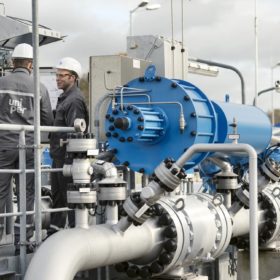
Europe could double ambition of its hydrogen strategy – white paper
Big brands will have to put their money where there mouth is on carbon commitments, though, and the EU will have to put its shoulder to the wheel, particularly in respect of the commonly-heard call to dispense with red tape. The prize could be a call for 280 GW more renewables capacity by 2030.

Iberdrola and Ingeteam set up JV to produce electrolyzers in Spain
Iberlyzer will begin operations next year and will produce more than 200 MW of electrolyzers in 2023, with an initial investment of close to €100 million. In addition, the Spanish energy giant has signed an agreement with Norwegian company Nel to build and develop large electrolyzers in Spain.
Major economies should divert fossil fuel Covid-recovery cash to clean energy before it’s too late
A report by Finnish company Wärtsilä has estimated the potential impact if every dollar committed to a non-renewables energy sector recovery was instead funneled to clean power.
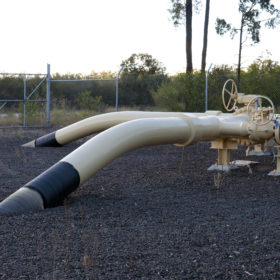
Italian utility Snam invests in hydrogen
The energy company has invested €33 million in UK-based electrolyzer maker ITM and has started a cooperation with the Italian railway operator to test joint hydrogen solutions for transport.
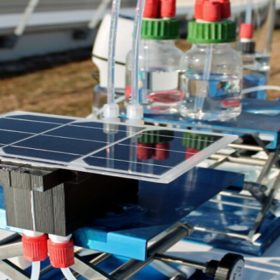
Different combinations of PV-powered electrolysers
An EU-funded research project coordinated by German research institute Helmholtz-Zentrum Berlin has tested several configurations for solar-powered hydrogen generation. First results showed which may be the most suitable PV technologies for electrolysis.
Green hydrogen economy assessment for US, Europe
A new report by the International Council on Clean Transportation provides forecasts for green hydrogen prices by 2050. The group claims to have included system costs that have been ignored in green hydrogen economy assessments thus far. Average green hydrogen prices, however, will almost be halved in the United States and Europe.
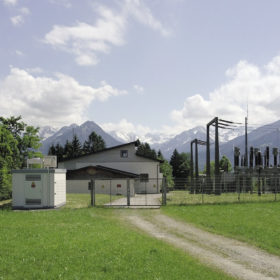
EU needs 108 GW of battery storage for 2030 climate targets
The EU appears poised to roll out battery storage capacity to provide flexibility to systems with more variable renewables. The European Commission’s Directorate-General for Energy has also noted policies that must be addressed to establish a level playing field for storage.
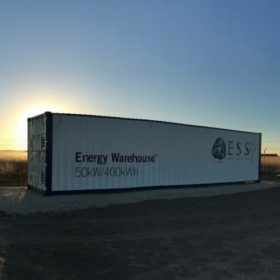
U.S. research teams aim for long-duration storage at $0.05/kWh
To get long-duration storage costs down to $0.05/kWh, research teams funded by ARPA-E are pursuing breakthroughs in flow batteries, hydrogen storage and other technologies – even thermovoltaics.
