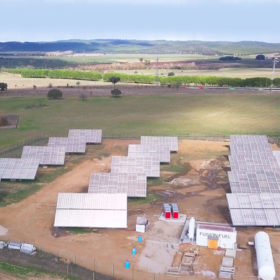
Portugal reveals first details of upcoming green hydrogen tender
The Portuguese authorities plan to award 10-year contracts to developers for 3,000 tons of green hydrogen and 10,000 tons of renewable methane.
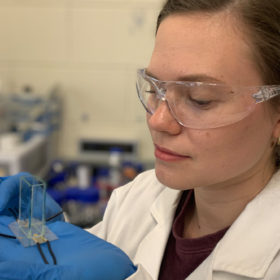
Australian researchers use sound waves to expand green hydrogen
Researchers from RMIT University and the University of Melbourne claim that high-frequency vibrations can release 14 times more hydrogen than standard electrolysis techniques. The discovery has ramifications for the expensive, rare materials currently used in electrolyzers.
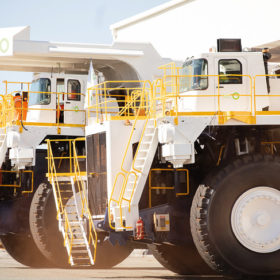
Weekend read: Shining magnate
Mining magnate Andrew “Twiggy” Forrest is the founder and executive chair of Australian iron ore producer Fortescue Metals Group. The company has announced an ambitious $6.2 billion decarbonization strategy and its Fortescue Future Industries subsidiary has rapidly become a global player in green hydrogen, along with a host of other energy transition technologies. Whether it is pushing to decarbonize mining, hashing out headline-making green energy deals, or using the popular “Rick and Morty” cartoon to educate people about the potential of green hydrogen, Fortescue and its shining magnate are talking the talk. But can they walk the walk? Blake Matich reports.
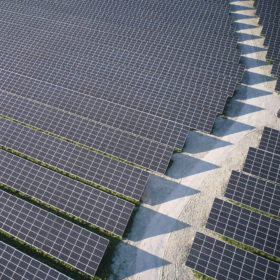
Weekend read: A game of risk
The rising popularity of “baseload” power purchase agreements (PPAs) has posed questions to solar electricity suppliers in the German market. How can projects that do not generate at night, and with wide seasonal output variation, effectively supply constant power to consumers? More importantly, who shoulders the price risk?

COP27 was a crucial step forward for hydrogen – here’s why
Three import deals signed by the EU at Sharm El Sheikh during this month’s COP27 summit show the European Union is serious about harnessing green hydrogen for its heavy industry, and about distributing the fruits of the energy transition on an equitable basis.
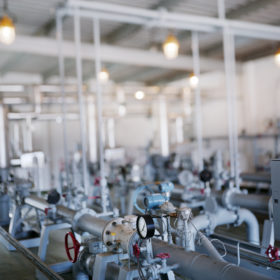
Spanish gas supplier sets up hydrogen production for heating, residential hot water
Madrileña Red de Gas and Pryconsa are developing a green hydrogen project that will meet the energy needs of 100 homes in Madrid.
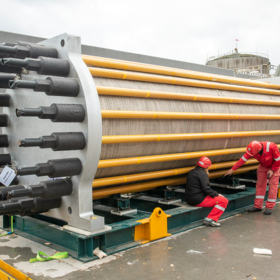
The Hydrogen Stream: World’s largest electrolyzer to be deployed in Norway
HydrogenPro is set to install the world’s largest electrolyzer in Norway, while Siemens is preparing to commission Germany’s second biggest electrolyzer.
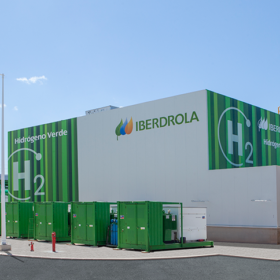
Iberdrola to invest €170 million in UK green hydrogen project
Iberdrola will develop a facility to supply green hydrogen to vehicles and machinery at the United Kingdom’s largest port, Felixstowe. The project is set start operations in 2026, with the capacity to produce 14,000 tons of green hydrogen in its first year, and the possibility to double this further down the line.
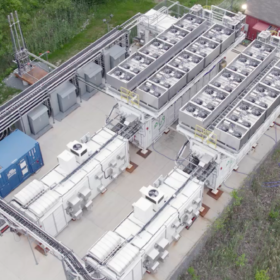
The Hydrogen Stream: Fuel cells for backup power
The PEM fuel cell test in New York demonstrated the viability of this technology at 3 MW, the first time at the scale of a backup generator at a data center. Meanwhile, a Spanish-Indian venture will develop up to 300 MW of installed green hydrogen production capacity in the Iberian Peninsula, and a Norwegian-German partnership aims to have a demo track powered by a fuel cell system on the road in mid-2023.
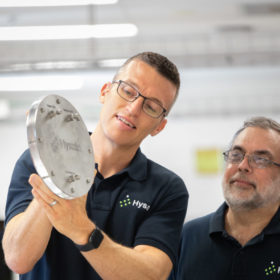
Hysata brings capillary-fed eletrolyzer tech closer to commercial production
Australian startup Hysata is seeking to commercialize a breakthrough made at the University of Wollongong which CEO Paul Barrett describes as a “brand new category of electrolyzer” with 95% system efficiency.
