
Best membrane for non-aqueous redox flow batteries
A Chinese-Finnish research team has identified composite membranes as the best future option for non-aqueous redox flow batteries.
The Hydrogen Stream: Massive hydrogen/green ammonia project in Chile, hydrogen atlas for Germany
Furthermore, Canadian integrated energy company Suncor and Canadian holding company ATCO are looking into a potential “world scale clean hydrogen project” in Alberta, and Japanese energy company Eneos and Japanese multinational automotive manufacturer Toyota Motor, are exploring hydrogen applications at Woven City, a prototype city in Japan.

France allocates 29 MW in PV tender for non-interconnected areas
Akuo, Amarenco and Voltalia secured the largest amount of capacity in the procurement exercise.
‘Hydrogen as a universal climate solution might be a bit of false promise’
Hydrogen and hydrogen-based fuels will not be able to move forward fast enough to replace fossil fuels and tackle climate change, according to a German-Swiss research team that claims direct electrification alternatives are cheaper and easier to implement. The scientists cite too-high prices, short-term scarcity and long-term uncertainty, as the main reasons for their skepticism.
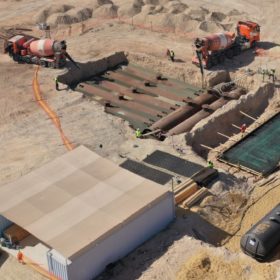
The best world regions for compressed air storage
Compressed air energy storage (CAES) may become an interesting solution for countries with weak interconnection with their neighbors, according to scientists from Finland’s Lappeenranta University of Technology (LUT). North America and sub-Saharan Africa were found to have the largest portion of suitable areas for this kind of storage technology, and Western Canada in particular, to have the world’s strongest potential.
The Hydrogen Stream: More hydrogen for the ports of Rotterdam and Antwerp
Australia and Chile are both granting funds to green hydrogen projects and Denmark is exempting pilot power-to-gas projects from complying with its energy legislation. Furthermore, the Fraunhofer Institute for Applied Polymer Research IAP is working to find solutions for private customers to produce hydrogen.

New electrolyte boosts lithium-air batteries
Scientists in the UK reported a breakthrough in lithium-oxygen batteries, achieved by experimenting with different electrolyte compositions. Working with ionic liquids, they were able to tweak the electrolyte recipe to minimize unwanted reactions during battery cycling, and greatly improve on both performance and stability.

Big solar-plus-storage comes to Taiwan
Taiwanese module maker URE Corp is planning to link a 150 MW solar plant to a 15 MW/15 MWh storage facility.
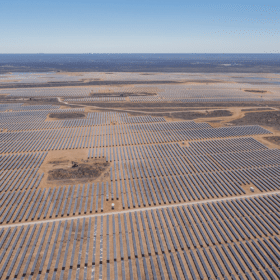
Massive solar-plus-storage plant comes online in the United States
The 420 MW/40 MW storage-plus-storage facility was deployed by the Danish energy company Ørsted on a 3,600-acre site alongside existing oil and gas installations in Texas.
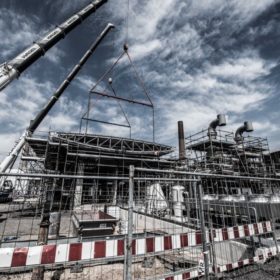
The Hydrogen Stream: Rosatom, EDF join forces, Shell builds Europe’s largest PEM electrolyzer
Moreover, the Germany-based Fraunhofer Institute for Chemical Technology has announced it is progressing with its research to reduce the cost of PEM water electrolysis and the Spanish government has established the criteria for its first pre-selection of renewable hydrogen projects.
