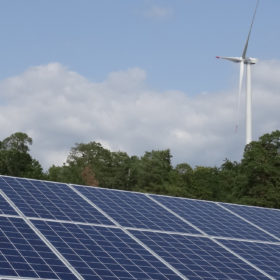
Forestalia plans additional 1.3 GW of solar in Spain
The Spanish company plans to develop 66 solar and wind parks that will add 3 GW of renewable energy generation capacity in 50 municipalities near Teruel, Aragon over the next four years. Some 34 facilities will be solar plants that will add 1.3 GW as part of an investment of more than €2.4 billion.

Uruguay launches 65 MW solar tender
Utility UTE is planning to resume solar energy development with a new large scale PV project after several years of almost zero growth.

South Africa proposes voluntary reduction of tariffs awarded in first three REIPPPP rounds
Power purchase agreements may be voluntarily renegotiated by extending the 20-year deals or enabling independent power producers to add more efficient PV components, thus increasing plant generation capacity.
Gambia plans 150 MW solar project with 20 MWh storage option
The solar park will be connected to the Soma substation, a piece of grid infrastructure expected to increase electricity access in the country to 60%. The project will add to 30 MW of other solar facilities under development in the West African nation.
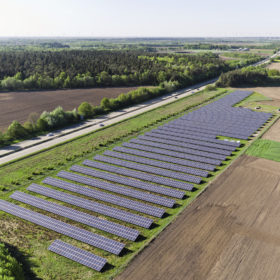
Germany added 2.72 GW of PV in eight months
In August alone, around 327 MW of new solar generation capacity was registered in the country. This month the FIT for solar systems up to 750 kW in size will fall another 1.4%.

Solar supporting peacekeeping in DR Congo
A report by the Powering Peace organization states UN missions in the Democratic Republic of Congo could reduce expense and pollution by using off-grid solar to power operations instead of diesel generators. Adding a 200 kW solar system with 200 kW/450 kWh of energy storage would reduce diesel consumption 80% for 10-year savings of almost $2.6 million, states the group.

Switzerland plans large scale solar auctions
The Swiss Federal Council intends to increase competition in the solar sector and set fixed tariffs for large PV projects using tenders. The electricity market will be fully opened up in a move industry association Swissolar says will discriminate against PV and threaten the rapid expansion of renewables.

Longi unveils results of bifacial module test
The exercise, conducted on Longi PERC bifacial modules by Germany’s TÜV SÜD at a test field in China, showed surprisingly higher gains in panels getting light reflection from painted-surface and grassland albedo. It also showed, Longi claimed, bifacial panels operate at lower temperatures than single-sided alternatives.
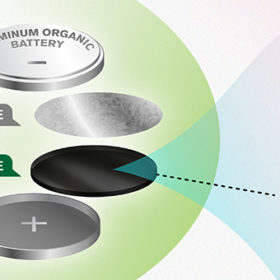
New aluminum batteries for renewables storage
The devices, developed by a European research team, are said to have twice the energy density of conventional aluminum devices. The scientists used a cathode made of anthraquinone, instead of one based on graphene, increasing energy density.

Solar-plus-storage to provide all the daytime electric needs of nation state
A 6 MW solar plant and 5 MW/2.5 MWh storage system are set to increase the share of renewable electricity on the Pacific island of Nauru from 3% to 47%. The $27 million project is being supported by the Asian Development Bank (ADB).
