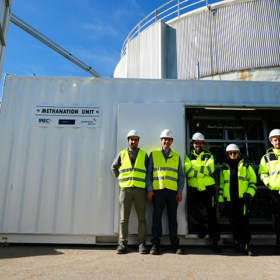
Gas Natural Fenosa launches power-to-gas project as advocates of the technology call for policy clarity
The Spanish power provider developed the pilot project with the Institut de Recerca en Energia de Catalunya and German spin-off Ineratec. Meanwhile, the European Power to Gas Platform has issued a paper demanding more regulatory certainty for power-to-gas, and to include it as an alternative in the cost-benefit analysis for grid extensions.
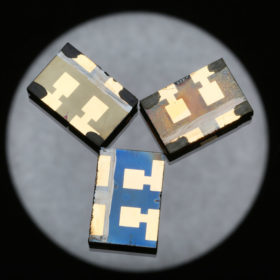
EU grants €5 million to perovskite research consortium
Belgian institute Imec will be the coordinator of a project involving many of Europe’s leading research organizations, which will focus on developing stable, scalable, low cost PV modules based on perovskite technology. The project, named ‘ESPResSo’ has received more than €5 million in funding from the European Union.

Interview: The time has come for a European solar industry policy
In an interview with pv magazine, SolarPower Europe CEO, James Watson explains how the Clean Energy Industrial Forum (CEIF) set up by the EU is paving the way for a resurgence of the European solar industry. Representatives from politics and industry met last Friday in Brussels to discuss how to further proceed.

France and EU finance Benin’s first solar power plant
The 25 MW Defissol project will be built at a cost of approximately €60 million (US$70.45 million).
EU Energy Committee’s proposal to upgrade 2030 RE target to 35% welcomed
The European Parliament has proposed both an upgraded, binding RE target of 35%, and plans to reduce energy consumption by 40% by 2030. The two resolutions, along with other provisions to remove fees or taxes on self-consumption, now have to be approved in January. SolarPower Europe has welcomed the news, saying the move will boost jobs and investment.
EU nears decision on new minimum price rules
The European Commission aims to introduce a new procedure for determining the minimum import price for Chinese PV panels, after member states have discussed the proposal. It still remains unclear if the minimum import price for solar modules was lowered at the beginning of September or it will be reduced by two cents per watt in October.
EU excludes Topray Solar and BLD Solar from minimum price undertaking
The EC said the two PV module makers have violated the undertaking for the minimum price of solar products imported from China.
EU greenlights reduction of surcharges for energy-intensive companies in Germany and Italy
The European Commission stated that reduction of cogeneration and renewable energy surchages for energy-intensive industries in the two countries complies with its 2014 Guidelines on state aid for environmental protection and energy.
EU energy regulators call on Brussels to remove net metering and priority dispatch for new RES from Winter Package
ACER and CEER have asked the European Commission to take a more market-oriented approach for the Clean Energy Package 2020-2030. The two organizations called on Brussels to remove priority dispatch for existing renewables and to avoid net metering.

EU freezes minimum import price at China’s request
The Chinese Chamber of Commerce had proposed not to the change the conditions of the minimum price agreement until the end of the interim review. Brussels has now accepted this proposal. In doing so, the European Commission has maintained the minimum import price for Chinese solar modules at €0.46/W.
