
New method to identify optimal floating PV sites
Researchers in Spain have created a novel method to select within a set of water bodies those where the investment in floating PV could be most beneficial. They combined geographic information systems, multi-criteria analysis, and intelligent optimization. The new approach reportedly results up to 8.4% better LCOE compared to conventional methods.
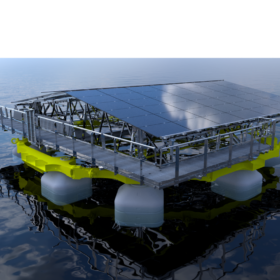
Saipem unveils offshore floating PV platform
Saipem, an Italian oilfield services provider, has developed an offshore floating PV platform in collaboration with its Norwegian unit, Moss Maritime.
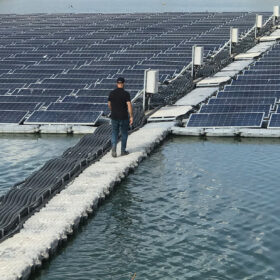
New model for offshore floating PV system design
Researchers at TU Delft modelled a variety of offshore floating PV structures to uncover the design parameters that affect durability and yield..
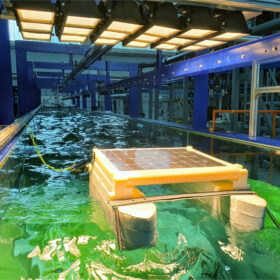
Scientists create setup to measure wave-induced power losses in floating PV
Researchers have measured the power loss of a 50 W panel stationed in a 30-meter wave tank. Based on ten different scenarios, they were able to draw an empirical equation for the prediction of power loss, with the highest loss being measured at 12.7%.
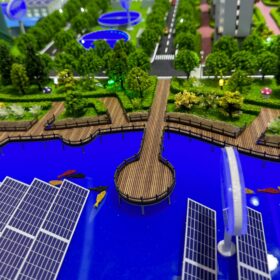
Optimizing bifacial solar panels for floating PV applications in tropical freshwater
New research from India shows how bifacial solar modules should be deployed to achieve strong performance in floating PV projects planned on tropical freshwater. Their experimental setup demonstrated that higher efficiency gains are achievable by gauging panel height, water depth, and tilt angle.
Botswana launches tender for feasibility study on floating solar at dams
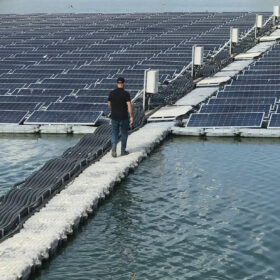
Botswana’s Water Utilities Corp. (WUC) is seeking a company to conduct an assessment and technical feasibility study for the implementation of floating solar projects at dams throughout the country. The deadline for submissions is Oct. 3.
Assessing floating PV costs across Europe
Researchers have analyzed the viability of floating PV in terms of net present value, internal rate of return, and LCOE. They included 25 European countries in their work, including Germany, the United Kingdom, Spain, and Italy.

Israel presents 2050 net-zero roadmap envisaging up to 77% solar share
The Israeli Ministry of Energy and Infrastructure has presented three scenarios for its 2050 green goals, changing in accordance with developments in solar, hydrogen, and nuclear power production. In the most solar-focused scenario, the country would have a PV capacity of 108 GW.

Floating photovoltaics for hydrogen generation, storage
New research from the UK shows that Oman could utilize a floating PV farm at the Wadi Dayqah Dam for hydrogen generation. The scientist said the project is technical viabile, although only with advancements in hydrogen energy storage technology could make it economically feasible.
IEA PVPS certifies that floating PV systems have small carbon footprint
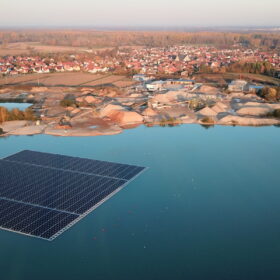
Floating systems cause slightly more CO2 emissions than land-based solar systems, mainly because of the additional components for the structure. But overall, they also perform very well from a climate perspective.
