‘New solar will be cheaper than existing conventional power stations in Germany this year’
With forecasters predicting the carbon price will top €100 per ton by 2030, the latest edition of a Fraunhofer ISE study into electricity generation costs has painted the renewables-versus-fossil fuels conundrum as something of a no-brainer.
Simplifying solar cell deposition
Scientists in Germany have developed a new process for deposition of silicon dioxide layers during cell production. Without the need for high pressure, flammable gases, or vacuum conditions, the process could lead to cost reductions for cell manufacturers, provided it can be developed and applied in a large-scale production setting.
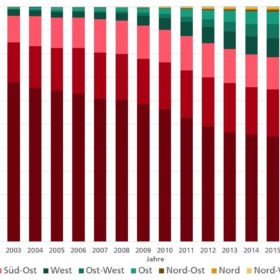
Growing interest for PV arrays with eastern and western orientation in Germany
A report from Fraunhofer ISE reveals that the share of PV systems with southern orientation has decreased from 61% in 2000 to 42% in 2019. It also highlights that solar rooftop installations with a tilted angle lower than 20 degrees have increased from just 5% in 2000 to 24% in 2019.
Webinar Q&A: A recipe for improved performance
In a recent pv magazine webinar, module degradation experts took our audience through the role of temperature and mechanical stress in causing modules to under-perform. We were treated to a look at some impressive results for modules integrated with Coolback – a solution that replaces the backsheet/rear glass and frame in a conventional panel and promises lower operating temperatures and better mechanical strength. Here, Simon Meijer and Alex Masolin, from Coolback – along with Fraunhofer ISE’s Andreas Beinert – answer some of the questions we didn’t have time for during the live broadcast.
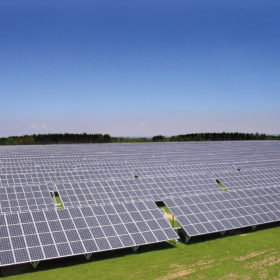
Fraunhofer ISE reveals Spain may host 5 GW module factory
The vertically integrated factory is expected to be located near Sevilla, in southern Spain. The factory will be owned and operated by the newly created company Greenland Gigafactory.
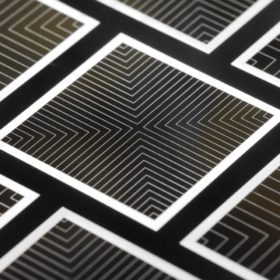
Fraunhofer ISE develops front/back solar cell with 26.0% efficiency
The cell showed open-circuit voltage values of up to 732 mV. It was fabricated with a back junction (BJ) design with a full-area p-n-junction at the back surface.
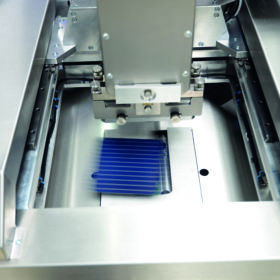
Simulating PV’s silver future
Scientists at Germany’s Fraunhofer ISE developed a model to simulate different setups for screen printing in solar cell metallization. The model provides a comparable ‘screen utility index’ value that can predict the usefulness of different architectures in the printing equipment in relation to the properties of a given silver paste. The approach, says Fraunhofer, will assist the PV industry in reducing the amounts of silver needed in silicon cell manufacturing.

Fraunhofer ISE develops technique to produce glowing colored solar modules
The German research institute has proposed a technique based on the surface structure of the wings of the morpho butterfly to produce colored BIPV panels for facades and rooftops. The process is claimed to make it possible to color the modules with an optical effect and not with color pigments, which reduce their efficiency.
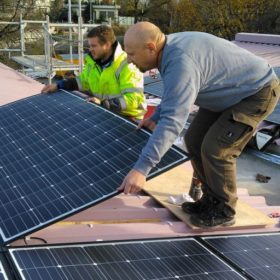
Germany’s solar boom set to continue in 2021
From PV panels to solar storage and solar collectors, rooftop installations grew 25% in Germany this year as due to increasing consumer demand for greater energy independence, lower solar tech prices, improved subsidy conditions and the rising popularity of electric cars. A further increase in solar technology expansion targets is expected to meet climate targets and avoid electricity shortfalls, according to the German Solar Association.
Another decade of PERC
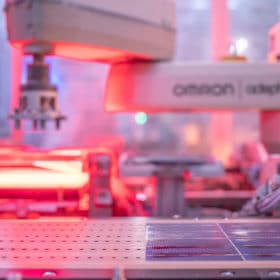
A new paper from scientists at Germany’s Fraunhofer Institute for Solar Energy Systems (ISE) examines the entire history of PERC technology, from its beginnings in laboratories more than 40 years ago to today, where it represents the majority of all PV cell production. And this story is far from over, as ISE lays out a pathway to efficiencies of 26% as well as use as the bottom cell in a tandem device that it believes will keep PERC technology in mass production to 2030 and beyond.
