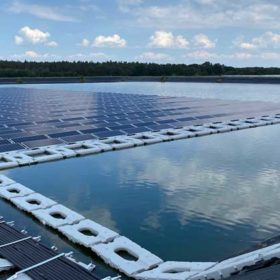
Floating solar park begins commercial operations in Germany
Developer 7C Solarparken has deployed a 729 kW floating system on a lake near Salzwedel. Power trader Next Kraftwerke will integrate power generated at the site into its virtual power plant.
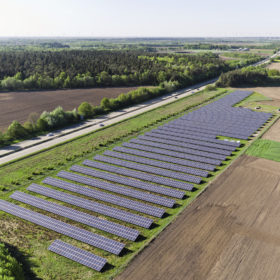
Germany installed 380 MW of solar in April
The rooftop segment maintained strong growth but utility scale PV saw a slowdown on previous months. In the first four months of 2020, newly deployed PV systems added up to 1,479.5 MW of generation capacity, compared with around 1.6 GW in the same period of last year. The nation’s cumulative PV capacity hit 50.46 GW at the end of April.
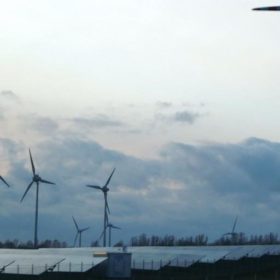
Solar sweeps the board again in German renewables auction
Not one wind power project was submitted to the German network authority for the April round of a national clean energy procurement program. Almost 204 MW of solar generation capacity was allocated across 30 solar projects with an average final electricity price of €0.053/kWh.
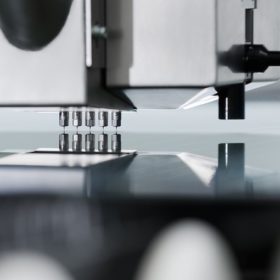
Hard times for German PV equipment providers
German engineering association the VDMA expects a difficult year because of the Covid-19 crisis. Sales had already dropped considerably last year and the current order intake level offers no glimpse of hope. However, the public health crisis may offer business in new markets determined to break a dependence on Chinese panels.

A gigawatt solar factory in Europe? Why it must be in France
With Swiss solar equipment company Meyer Burger laying plans for a module fab in North Rhine-Westphalia and Norwegian panel maker REC Group mulling a fab in Sarreguemines, northeastern France, Xavier Daval – from French renewables association the SER – says it is time Europe resumes its path to a stable solar manufacturing industry, not least because of the rising proportion of solar module costs accounted for by shipping.

Germany deployed 1.1 GW of solar in Q1
In March alone, 368 MW of new PV capacity was deployed, representing an increase of just 18 MW from the same month a year earlier.

Uncapping Germany’s 1 TW of PV potential
EuPD Research has conducted a survey showing that potential investors see Germany’s 52 GW cap for solar incentives in the residential segment as the main barrier to future growth. Renewable energy trade body Bundesverband Neue Energiewirtschaft, meanwhile, said the nation has the potential to reach 1,000 GW of installed solar capacity by 2050.
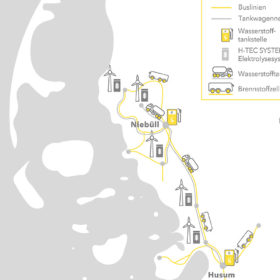
North German pilot hydrogen project gets cash boost
German company GP Joule wants to build hydrogen transport infrastructure in North Friesland. The electricity generated by five wind farms in the region will be converted to green hydrogen to be delivered to filling stations in Husum and Niebüll and used by two fuel-cell buses and five cars.
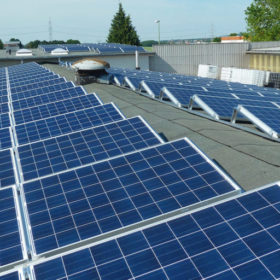
Germany has 200,000 solar-plus-storage systems
EuPD Research estimates around 65,000 energy storage systems linked to rooftop PV were installed last year thanks to increasingly popular solar arrays and electric vehicles as well as rising electricity prices.
German solar installers expect massive market contraction this year
According to a recent survey by EuPD Research, political conditions are to blame for the expected slowdown, rather than the coronavirus pandemic. The potential failure to remove the 52 GW cap for solar incentives is expected to have a much stronger impact on potential investors.
